Home > Podcast > Energy transition bottlenecks and how to overcome them
The global energy transition is not slow due to a lack of ambition. Governments, investors, and industry leaders worldwide are committed to decarbonisation and renewable energy. The challenge is turning those ambitions into deliverable projects.
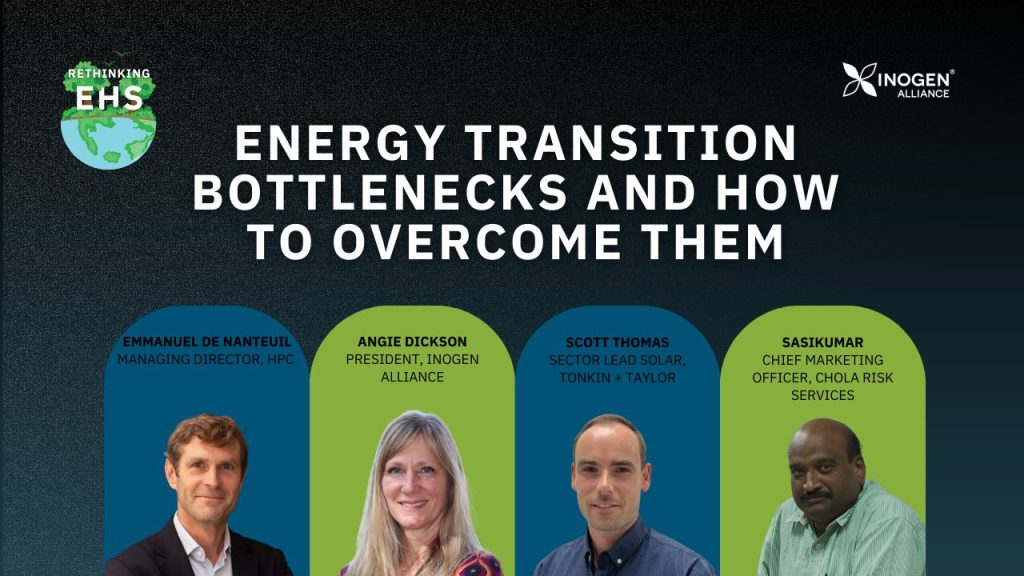
In this episode of Rethinking EHS, hosted by Angelique Dickson, President of Inogen Alliance, the discussion centres on the practical barriers to delivering energy transition projects, with experts from Europe, India and Aotearoa, New Zealand examining regulatory complexity, stakeholder engagement, financing, land use and grid infrastructure as key themes. Scott Thomas, Sector Lead – Solar at Tonkin + Taylor, shares insights into the country’s renewable energy landscape and the practical realities of developing utility-scale renewable projects. Tune in to gain valuable perspectives and join the conversation on accelerating the global energy transition.
Despite varied regional challenges, a common theme emerged: successful energy transition projects require early planning, stakeholder engagement, and practical delivery strategies. In Europe, projects are often delayed by permitting, political uncertainty, and the need to balance climate and economic goals. In India, land acquisition, transmission infrastructure, and coordination between the state and central governments remain key hurdles, despite strong investor interest and government support. In New Zealand, the challenge is different. The country already operates one of the world’s greenest electricity grids, with around 80-90 per cent of its generation from renewable sources. The focus is now on expanding renewable capacity while maintaining grid resilience and environmental outcomes.
As Scott explains:
“Our base load [in New Zealand] is around 80 to 90 percent renewables. It is making sure that the mix that comes on board is still green.”
New Zealand’s renewable energy opportunity
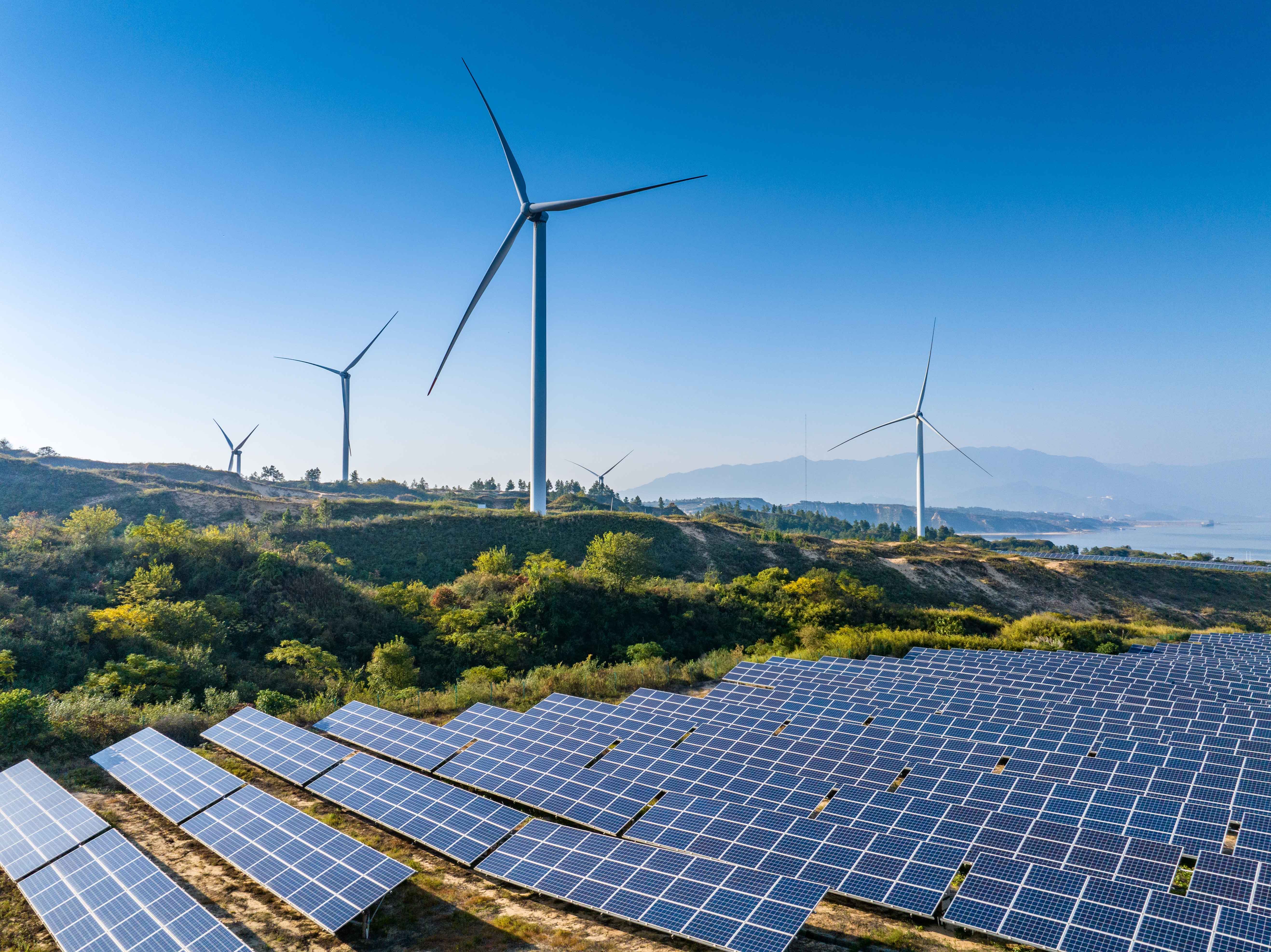
New Zealand is well-positioned for renewable energy growth, particularly in solar, battery storage, hydrogen, and wind. Much of the land suitable for renewable infrastructure has already been modified by agricultural use, reducing some of the biodiversity impacts commonly associated with large-scale development overseas.
However, renewable energy projects still face important challenges such as resource consenting, community + stakeholder engagement, grid connection + infrastructure, geotechnical + environmental conditions, and seismic + natural hazard considerations.
Scott highlights that consultation is critical to project success: “Consultation is not just sharing development plans, but listening, acting on feedback and being flexible.”
How Tonkin + Taylor supports renewable energy projects
We deliver expertise on renewable energy projects throughout the entire project lifecycle, from early feasibility and consenting through to detailed design and construction support, including:
Solar farm development
Resource consenting + planning
Geotechnical engineering
Civil + structural design
Hydrology + stormwater management
Natural hazard + seismic assessments
Environmental + stakeholder management
We help clients navigate complex regulatory frameworks while delivering resilient, buildable and locally compliant projects.
Scott Thomas
Sector Lead – Solar + Geotechnical Consultant | Tonkin + Taylor, New Zealand Scott is a project manager at Tonkin + Taylor, providing expertise in the conception, planning and delivery of multi-disciplinary utility-scale solar projects. Having successfully delivered several solar projects, he has developed skills in risk analysis, stakeholder engagement, budgeting, and contingency planning. Scott is passionate about renewable energy and is also contributing to sustainability initiatives in the Pacific region related to civil construction.