









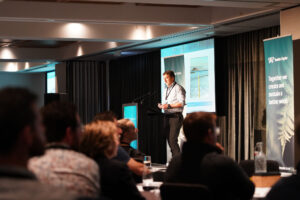


Connecting Canterbury calls for urgent action on the infrastructure that holds the region together
Canterbury is one of New Zealand’s economic engines and the gateway to the South Island. Its transport and digital networks do more than move people and freight. They connect communities, enable exports and underpin national resilience. After more than a decade of post-earthquake rebuilding, the region is growing again. But that momentum is at risk as ageing assets, climate exposure, fragile transport links and funding constraints put pressure on productivity and liveability. Connecting Canterbury, developed by Infrastructure New Zealand in partnership with Simpson Grierson, calls for coordinated, long-term infrastructure planning beyond incremental, individual projects. Built on extensive industry engagement, the work aims to inform the regional spatial plan and potential regional deals.
A 30-year vision for 2056
The publication sets out a vision of Canterbury as the South Island’s gateway and growth engine, where people have real housing and transport choices, and where freight and visitors move reliably through an integrated road-rail port and airport network. It also calls for infrastructure that can withstand earthquakes, floods and climate shocks, and recover in days, not months, with long-life assets planned beyond political cycles.
Simpson Grierson partner Catherine Shipton says the region can lead again by working together.
“Canterbury has a chance to set the national standard in asset management and climate resilience through a coordinated approach between the owners, operators, managers, developers and financiers of the region’s infrastructure.”
Why this matters nationally
Nick Leggett, Chief Executive of Infrastructure New Zealand, says Canterbury’s infrastructure is essential to the nation’s economy.
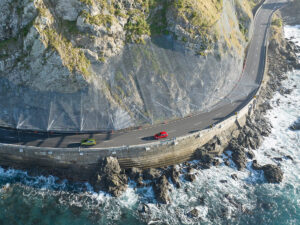
“Across the region, ageing bridges and culverts quietly carry the weight of our freight, farm production, tourism, and daily commuting. Many are reaching the end of their design life. Replacing them is not optional maintenance; it is strategic investment.”
Minister for the South Island: plan together, deliver together
Hon James Meager says the paper reflects constructive leadership and supports a partnership-led approach:
“The South Island can only maintain its growth and productivity advantage by people working together and putting forward a plan. I strongly support the kind of partnership-led approach advocated for here, where central and local government, iwi and the private sector come together around shared priorities, long-term planning, and more coordinated delivery.”
Tonkin + Taylor’s contribution, with Chris Perks recognised in the publication
Tonkin + Taylor contributed practical delivery and technical insight to Connecting Canterbury, and Chris Perks is formally acknowledged in the publication for his work on the content. Chris is our Transport + Delivery Sector Director, and his contribution reflects the report’s focus on real-world transport connectivity and long-term asset renewal across the region.
The publication also recognises Michael Singleton from Christchurch International Airport for his contribution.
Read Connecting Canterbury
Connecting Canterbury was developed by Infrastructure New Zealand in partnership with Simpson Grierson, drawing on input from the private sector, public sector and iwi leaders across the region. It’s intended to help Canterbury align on priorities, strengthen coordination, and support the next steps on the regional spatial plan, regional deal discussions, and long-term infrastructure investment decisions.
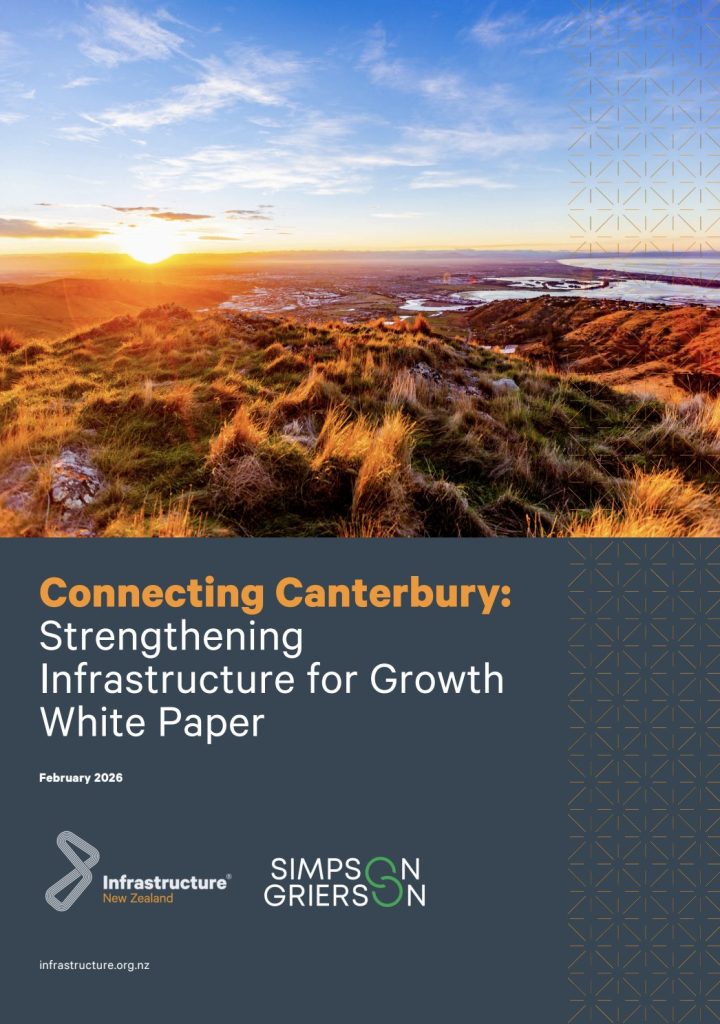
Read the full White Paper: Connecting Canterbury here.
FAQs
To address common queries, below are answers to frequently asked questions about Connecting Canterbury:
What is Connecting Canterbury? A publication by Infrastructure New Zealand and Simpson Grierson that sets out a 30-year direction and near-term priorities for Canterbury’s connecting infrastructure.
Why does it focus on bridges and culverts? Because they are lifeline assets and many are ageing and vulnerable, they can create single points of failure across major rivers and freight corridors.
What action does it recommend first? A region-wide, centrally supported programme to replace and upgrade bridges and culverts at scale, ideally aligned with a regional deal and delivered with private sector partners.
How does it address climate risk? It calls for climate-ready design, standardised risk assessment, and built-in redundancy so key routes can keep operating during floods, earthquakes and extreme weather.
Does it propose new funding tools? Yes. It discusses programme-based delivery and PPP-style approaches, asset recycling with proceeds reinvested in infrastructure, and value capture or user pays options where appropriate.
How does digital infrastructure fit in? Digital networks enable real-time monitoring, emergency coordination and better long-term modelling and planning for resilience.