










Would you invest in your own transition plan?
A transition plan can set ambitious targets and still leave a basic question unanswered: how will this business actually deliver the plan?
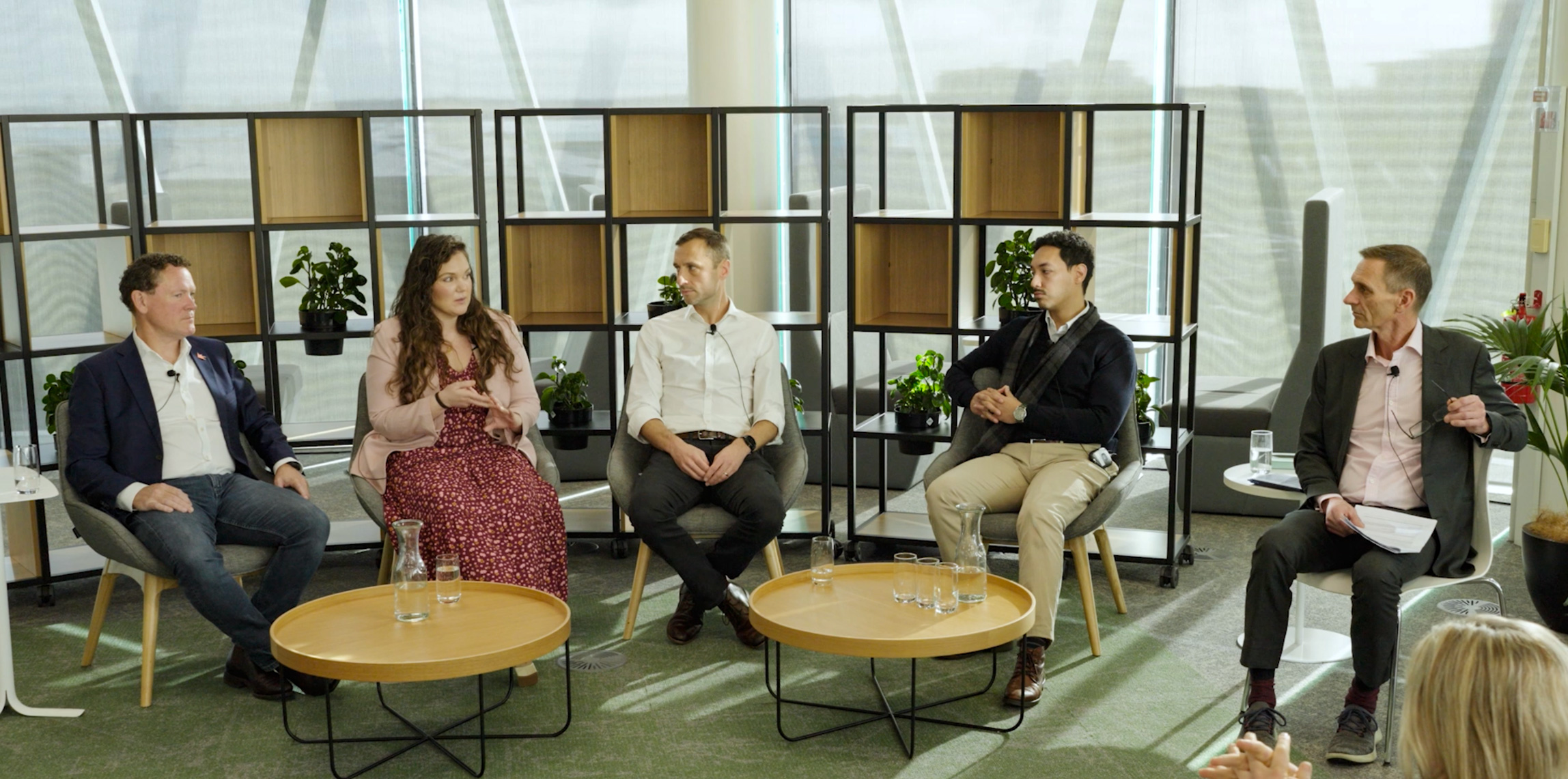
At our Good Growth event, speakers from Genesis, Kiwibank, the Centre for Sustainable Finance and Pathfinder Asset Management brought that question firmly into the world of business decisions. Their perspectives spanned running an energy business, lending to companies, investing in them and creating the conditions for investment. Throughout the conversation, credibility came back to how businesses plan, allocate capital, and respond when circumstances change.
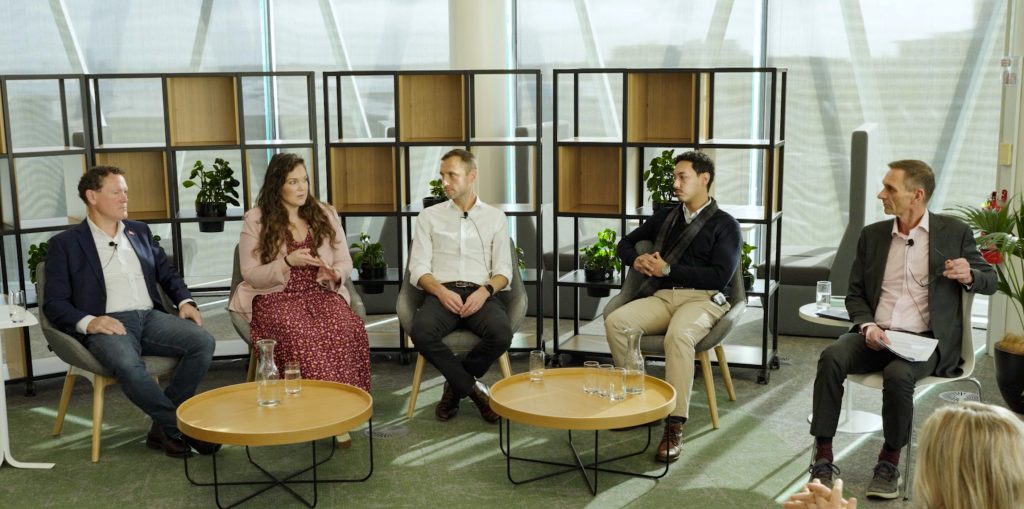
Speakers:
- Stephen England-Hall – Chief Revenue Officer, Genesis Energy
- Allison Rokke – Senior Manager – Transition Strategy, Kiwibank
- Alexandre Safran – Senior Investment ESG Analyst, Pathfinder Asset Management Ltd
- Andy O’Hare – Head of Strategy and Financial Solutions, Centre for Sustainable Finance
Host:
- Simon Harvey – Principal Consultant – Strategic Sustainability, Tonkin + Taylor
Genesis offered a practical example. Its strategy connects investment in electricity generation and support for customers moving towards electrification with the economics of a changing energy system. Resilience, affordability, productivity and shareholder returns are central to that conversation. Climate considerations are woven into the choices the business makes about its future.
That prompted a useful challenge: do we even need the word ‘transition’? Should this simply be the enterprise plan?
The discussion made a strong case for integration. A good business plan needs to address the material risks and opportunities ahead, including those arising from climate change. The work involved in transition planning helps uncover them; its value comes through when that understanding shapes strategy and investment.
This echoes the argument in our paper, Credible transition planning: Moving from narrative to navigation. A credible plan connects ambition with decisions about capital, operations and resilience. Its usefulness should be visible in what the business does.
The investor perspective brought a particularly direct test: “Is this realistic? Does this hold up?”
Investors want to understand the thinking behind a target. What projects and capital expenditure will deliver it? What milestones will show progress? Are management incentives aligned? Does the business understand its dependencies, including technologies or supply chains it cannot control?
Believability also means being honest about uncertainty. Genesis described using scenarios to test investment decisions against a range of possible outcomes. A credible plan needs room to adapt as assumptions change, while maintaining a clear direction.
The conversation also raised a harder question: how do we support smaller businesses with fewer resources to manage those uncertainties?
An SME may have a narrow customer base, limited alternatives if a supplier fails, and little financial headroom to absorb disruption from a flood or other hazard event. Those vulnerabilities are critical to the larger businesses that depend on it, too. Resilience runs through the value chain in both directions, through to customers as well as suppliers.
The banking discussion pointed towards practical conversations, accessible tools and investment in resilience, with support proportionate to the business. The wider discussion highlighted the need for banks, insurers, government, and businesses to work together so that risk reduction can be recognised and financed.
That reinforces another theme in our paper: business transition and adaptation need to be considered together, across interconnected systems. A company’s plan depends partly on the resilience of the businesses and communities around it.
Watch the 17-minute highlights for a frank conversation about what makes a plan believable, how it becomes part of running a good business, and who needs support to make it work: