
Infrastructure for a changing climate
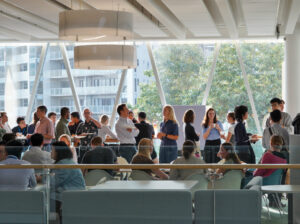
Manea Sweeney joined this all-women episode of Inogen Alliance’s Rethinking EHS: Global Goals, Local Delivery podcast, hosted by Angelique Dickson, to discuss Te Ara Tupua alongside a major renewable energy transmission project in Germany with Frauke Menzel from GINGER HPC, exploring what genuine climate resilience looks like across very different contexts.
What is Te Ara Tupua?
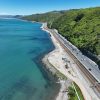
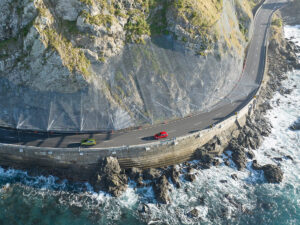
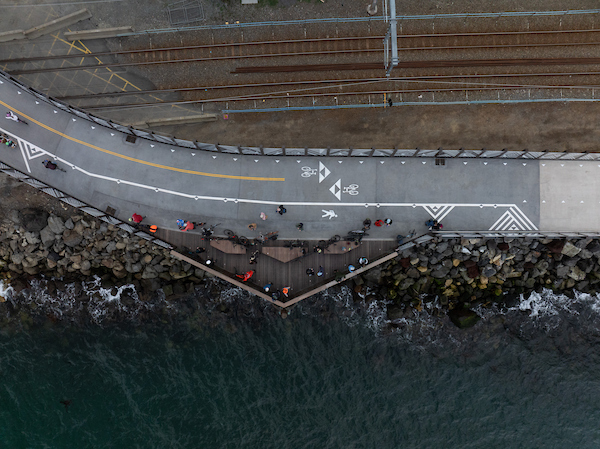
Te Ara Tupua is a 12km shared walking and cycling path between Wellington and Lower Hutt. The first section, Ngā Ūranga ki Pito-One, opened in May 2026 – 4.5km of separated coastal path running along the Wellington Harbour edge, giving cyclists, pedestrians, skaters, and runners a safe route that didn’t exist before.
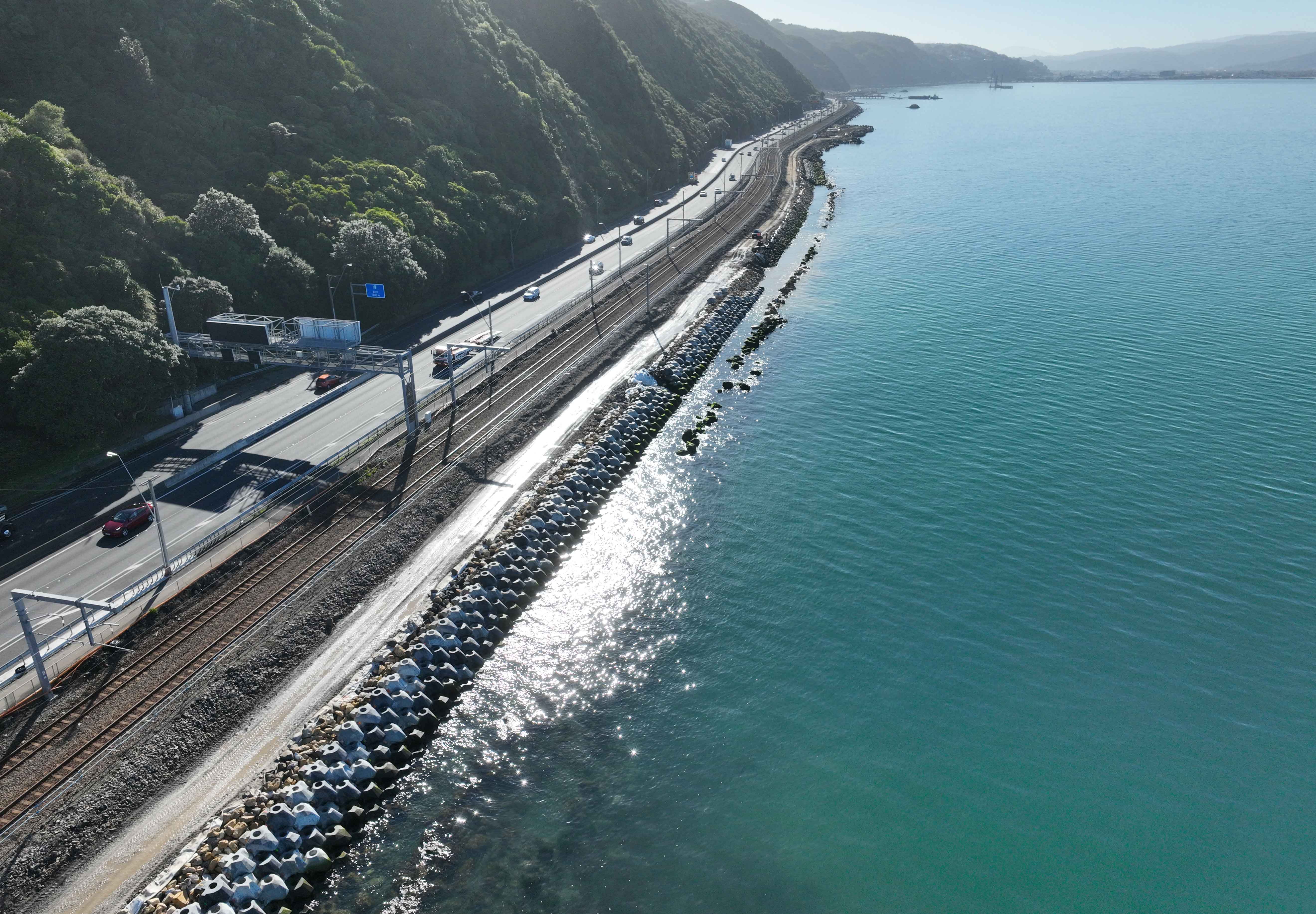
But the path is only part of what Te Ara Tupua delivers. Running alongside it is a new seawall, built to protect State Highway 2 and the main rail line from coastal storms, wave action, and the long-term effects of sea level rise.
The name, in te reo Māori, means the ancient pathway.
Wellington’s main link between the city and Lower Hutt runs along one of the most exposed stretches of coast in New Zealand. The state highway and rail line squeeze through a narrow corridor, pinched between the Remutaka Range and Wellington Harbour – wave action on one side, steep cliffs on the other.
In 2013, a major storm washed out sections of the railway along that corridor. Commuters and freight were disrupted across the region. What was clear then – and clearer now, as sea levels continue to rise and storm events grow more intense – is that this corridor needed more than maintenance. It needed a fundamentally different approach.
Rethinking what resilience means
Tonkin + Taylor Senior Planner Manea Sweeney challenges a common assumption about what infrastructure resilience actually is:
“Infrastructure resilience isn’t about a bridge or road or a seawall that’s able to survive a storm. It’s more about whether communities can function, whether the service can continue to be provided, and whether our investment decisions leave good choices for future generations.”
That framing shaped every major decision on the project. Te Ara Tupua didn’t set out to protect a highway. It set out to preserve what that highway delivers – for the people who depend on it today, and for those who will depend on it decades from now.
Designing for a future we can’t fully predict
Sea levels are rising, but no one can say exactly how fast. Future storm events will combine in ways we can’t predict. Te Ara Tupua’s design team accepted this uncertainty and built adaptability in from the start.
The seawall uses interlocking concrete X-block units – a system that can be raised in height as conditions change, without having to rebuild from the ground up. Physical and numerical modelling tested the approach through multiple scenarios. The result was a construction method that reduced aggregate transport, shortened the programme, and cut embodied carbon compared with a conventional seawall.
As Manea explains: “Rather than developing to a certain scenario, the project incorporated the ability to adapt.”
This is part of a broader shift she sees across the sector:
“We’re trying to transition from designing infrastructure to resist hazards, towards entire systems that can adapt to changing conditions.”
Partnership that shaped the project from the beginning
What made Te Ara Tupua distinctive was who was involved, and when.
Taranaki Whānui ki Te Upoko o Te Ika and Ngāti Toa Rangatira – the two principal iwi of the Wellington region – were partners from the outset. They were involved in investment decisions and procurement before a single design decision was made. They were not consulted after the fact.
The difference that made is tangible, as Manea describes: “We got this cultural narrative from our indigenous communities, and environmental outcomes and project purposes which were much richer because of it.”
The project tracked partnership commitments throughout construction – including training and accreditation for people from local iwi communities and spend in the local economy. Regular relationship surveys gave all parties a frank view of where things stood.
The name Te Ara Tupua carries the weight of that partnership. Reclaiming traditional place names for the whole Wellington region – Māori and non-Māori alike – gives people something infrastructure rarely offers: a connection to where they are that stretches back long before the road or the railway.
As Manea puts it: “The land has a much longer history than humans do.”
A better question for infrastructure planning
Manea’s challenge to anyone planning infrastructure for a changing climate is to start differently:
“Ask not how do we protect this asset, but what services are we trying to preserve – and for who, and for how long.”
Te Ara Tupua is what that question looks like in practice – a seawall built to adapt, a pathway built to connect, and a project shaped by the people it serves from the very beginning.
Acknowledgements
Tonkin + Taylor is part of the Te Ara Tupua Alliance which delivered the Ngā Ūranga ki Pito-One section of Te Ara Tupua, alongside Waka Kotahi NZ Transport Agency, Downer NZ, and HEB Construction. Read more about the services provided by Tonkin + Taylor on Te Ara Tupua Shared Cycle and Walkway
Manea Sweeney
Technical Director – Engagement, Planning + Partnerships | Tonkin + Taylor
Listen to more episodes on Rethinking EHS
Podcast brought to you by