












Energy strategy is the path for a prosperous, sustainable future
By Dr Tim Fisher, Managing Director, Tonkin + Taylor Group, and past president, Engineering New Zealand
Energy is a massive enabler for New Zealand to achieve a prosperous, sustainable future. Get energy strategy and policy right, and the country adds NZ$22 billion a year to GDP by 2035. This rises past NZ$33 billion by 2050 alongside a 22% cut in national emissions.[1] It is about growth and prosperity, and done right it’s about sustainability as well!
Get it wrong and the cost shows up everywhere. Household and industrial power bills climb, industry closes, jobs are lost, and investment stalls while companies wait for clarity. New Zealand keeps importing more than NZ$10 billion of fossil fuel a year that our own renewable resources could largely replace, and that limits how fast the country can decarbonise transport and heavy industry. Few other policy areas carry this much consequence, and few get discussed with as little urgency.
Our legacy of energy and growth and lessons learned
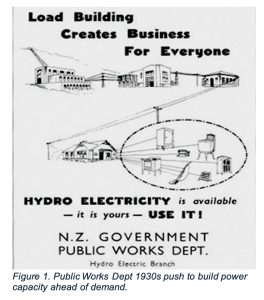
Investment in hydro, geothermal and grid infrastructure across the twentieth century built an energy advantage that has underwritten several generations of growth. It started with the Public Works Department’s 1930s ambition to build capacity ahead of demand and took off with an eleven-fold expansion in generating capacity in the three decades after the Second World War. That growth wasn’t always smooth; supply fell behind demand, often enough to trigger blackouts in the early 1950s, but that increased the urgency[2].
Despite that, our lack of energy security was exposed by the 1970s oil shock. Robert Muldoon’s Think Big programme showed what happens when government tries to build big, fast and alone[3]. The Clyde Dam and the Motunui synthetic-petrol plant chased energy self-reliance at a cost that blew out badly in both time and money.
Deregulation through the 1980s and 1990s fixed the worst of that by handing delivery to industry. What it didn’t replace was the direction-setting role government used to play, and that gap is what New Zealand is living with today.
We need to unlock a complex set of challenges
We have a set of inter-dependent challenges that need to be unlocked. These include gas supply, firming (the backup supply for intermittent wind, solar and hydro), energy market, consenting, connection/grid issues, geo-political security, and resilience.
We have an affordability issue. Annual price inflation for petrol and diesel is 27.5% and 71%, respectively[4]. In real terms, electricity is 65% more expensive today than when the retail market was first established in 1999[5].
New Zealand’s renewable resources are genuinely abundant and cheap by world standards. Inexpensive hydro, geothermal, and wind already carry most of the grid, and wholesale prices should reflect that advantage. Instead, New Zealand now sits among the higher-priced electricity markets in the OECD, and the OECD’s May 2026 Economic Survey names energy as one of the country’s top three economic issues and opportunities.
The energy market mechanics explain why. Gas scarcity and higher generation costs from thermal plants set the marginal wholesale price much of the time. Dry years remove hydro generation from the mix and expose how little affordable firming capacity backs up intermittent generation.
Industrial users absorb the resulting price spikes first, then households follow through hedged contracts and retail bills. Lack of planning, shifting gas and firming policy (e.g. Onslow, coal or LNG), and those market mechanisms that reward the wrong behaviour have got us here.
Security of supply must also be a consideration. A fallen pylon can cut power to a region (Northland, 2025); a dry winter can strain power, hydro, and gas supply in the same season (North Island blackouts, 2021). New Zealand’s grid and fuel networks carry real exposure to natural hazards, ageing assets, and increasingly cyber threats. Resilience needs to sit inside the same roadmap as generation and firming, considered from the start rather than patched in after the next outage.
 The biggest gap is direction
Households, industrial users, generators, lines companiesand regulators are asking for the same thing: a plan that survives more than one electoral cycle. More broadly, analysis puts the cost of stopped and restarted infrastructure projects[6] at NZ$11.8 billion over the past 25 years, and that figure doesn’t capture the slower drag of non or reversed positions on gas, industrial electrification, and firming investment.
The National Infrastructure Plan has already called for accelerated electricity investment, backed by clear and coordinated government policy. It is widely supported by political parties. That call needs a directional plan behind it, not just agreement in principle. At the moment we are getting piecemeal policy – it is too complex and long-term for short-termism.
A companion piece, Smarter, faster, better: building New Zealand’s energy future, sets out how the delivery model needs to change too.
What the fix looks like in practice
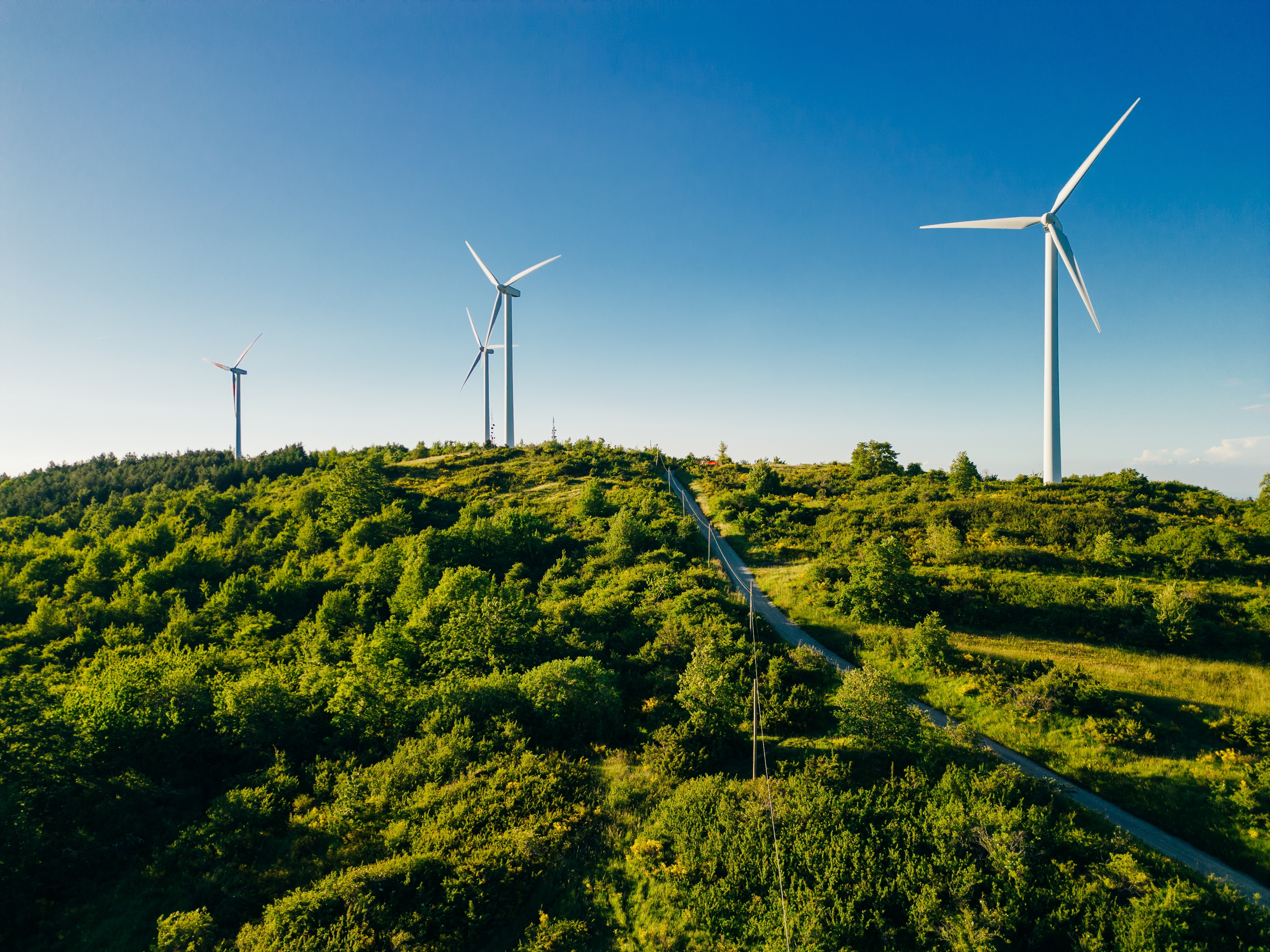
The fix is a clear energy strategy, and the policy and actions to enable it. That means growing our distributed renewable energy supported by firming, transitioning gas, supportive energy market mechanisms , and decarbonising transport and industry.
The World Energy Council frames the challenge as a trilemma of security, affordability and environmental performance. Treat any one of those as optional and the other two suffer. New Zealand must embed these principles into our strategy and policy setting.
Transpower’s Aotearoa Electrified modelling calls for generation capacity to grow by 67% by 2050[7] to meet demand from transport and industrial electrification alone. MBIE separately estimates demand could grow 60% by 2040 if electrification of transport and process heat moves at pace. Add the essential infrastructure of a modern economy, which is data centres and AI infrastructure, and the case for building more generation close to home gets stronger again, both for growth and for energy security.
Frontier Economics, MBIE and the OECD have each pointed to the same fix for the firming gap: a mandatory firming and flexibility market, so generators earn a return for keeping supply reliable through a dry year rather than for gas or coal happening to set the price on any given day. Expanding demand response and strengthening competition matter too.
None of it happens through a single policy announcement. It needs clear energy strategy and sustained follow-through across several governments.
New Zealand Steel is a useful marker of what’s possible. The company built a new electric arc furnace, powered by renewable electricity and fed by local scrap steel, cutting its emissions roughly in half and securing the future of domestic steelmaking. That is the kind of capital decision a business makes when it has government support and it can see enough certainty in future power supply and price to commit.
Why this matters to New Zealand
New Zealand’s current renewable electricity sector is a genuine competitive advantage, and we must build on it to have an affordable green energy system. In a competitive world, we need to play to our strengths – New Zealand can be a world leader in affordable green energy.
A credible plan also does something less obvious: it gives investors, businesses, and communities enough certainty to commit rather than wait and watch. The private sector is here and ready to act. However, businesses making a capital decision spanning more than ten years need to trust that the settings they’re planning against will still hold beyond the election cycle. Right now, few would bet on that, so we need to advocate for what the country needs.
The opportunity is real, and so is the cost of delay. Two questions matter most:
- Will government commit to an energy strategy durable enough to survive a change of government?
- Will the market reward firming and flexibility properly, instead of leaving dry-year risk to show up as energy inflation?
Answer those, and New Zealand turns its renewable advantage into a prosperous, secure future.
About the author
Dr Tim Fisher is Tonkin + Taylor’s Group Managing Director, overseeing the performance and strategy of the Group’s companies and working with the Board to govern the business and plan for its future. He has been with Tonkin + Taylor for 20 years, working across consulting and management roles including Executive Leader for Engineering, Clients, and Australia, and Water Sector Leader. Tim is also a Water Engineering Technical Director, specialising in stormwater engineering, water quality, flooding, rivers, and sedimentation. As a design lead, expert witness, and trusted advisor, he has contributed to award-winning projects, four Boards of Inquiry, and numerous planning, Environment Court, and legal proceedings. Tim is a Chartered Professional Engineer and Fellow of Engineering New Zealand. He was President of Engineering New Zealand in 2022/23 and served on its Board from 2018 to 2024.

[1] Modelling from the Climate Leaders Coalition’s 2026 Driving Sustainable Growth report (climateleaderscoalition.org.nz/wp-content/uploads/2026/03/WEB_SBC-CLC-Report_FINAL.pdf)
[2] Electricity Networks Aotearoa, Our History (https://www.ena.org.nz/about/our-history-a-brief-overview)
[3] See The New Zealand Initiative, The Seduction of Grandeur, for a fuller account of the Think Big programme (https://www.nzinitiative.org.nz/reports-and-media/opinion/the-seduction-of-grandeur/).
[4] Why inflation is up again and what’s really driving it – The Front Page – NZ Herald
[5] 5 grim statistics about NZ power prices — Consumer NZ
[6] Analysis of stopped and restarted infrastructure projects cited by Infrastructure New Zealand, Civil Contractors New Zealand, and Water New Zealand (citation to confirm).
[7] Transpower, Aotearoa Electrified; see also Transpower, Te Kanapu – Our Energy Scenarios.