







Smarter, faster, better: Building New Zealand’s energy future
By Glen Nicholson, Chris Perks and James Russell at Tonkin + Taylor
New Zealand’s energy infrastructure pipeline is growing, but delivery remains too slow and expensive. The central problem is not the amount of work, but how we deliver it.
Teams repeatedly recreate designs, specifications, consent material, and procurement processes. Constructors often join after the main decisions have been made. The result is that access and supply-chain problems surface late, when they are hardest and most costly to fix. We need a repeatable delivery model built around visible work programmes, proven design inputs, early construction advice, and resilience from the outset.
Tim Fisher’s companion piece sets out the stakes: get energy policy right, and New Zealand will add $22 billion a year to GDP by 2035. Delivery is what determines whether that plan holds together or comes apart.
Treat infrastructure as a programme of works
The first step is to show the market what is likely to be built, when decisions will be made, and how projects will come to market. That visibility is what turns planning into a programme of works.
New Zealand has national infrastructure and electricity planning mechanisms, including Te Waihanga’s Infrastructure Pipeline and Transpower’s long-term grid planning. But the organisations expected to deliver the work still need greater visibility of which projects are sufficiently funded, consentable, and likely to proceed.
A long list of possible projects is not an investable pipeline. Constructors, consultants, suppliers, insurers, and financiers need confidence in timing, sequencing, commercial models, and decision points.
Energy asset owners, established gentailers and new entrants alike, can provide that confidence through realistic 5-10-year programmes of works. These should bring together generation, grid connections, substations, distribution upgrades, access works, outage requirements, and long-lead equipment. A known pipeline also eases competition for scarce skills and equipment, which can lower costs for everyone building against it.
That visibility changes business decisions. Contractors can retain specialist crews and invest in plant and people. Suppliers can place earlier orders. Consultants can build the right consenting and design teams. Councils can prepare for the workload. Regional businesses can see where demand is coming from. Each of these responses depends on the same clear programme of works.
Standardise the repeatable work
Too many projects still start from a blank page.
Access tracks, laydown areas, substation civil details, material specifications, traffic plans, erosion controls, and descriptions of common construction effects are routinely recreated.
New Zealand’s energy sector needs a shared delivery playbook for this repeatable work. It should cover proven design details, adaptable specifications, common environmental assessment inputs, standard construction methods, and established approaches to noise, dust, vibration, and traffic.
Site-specific engineering and engagement would still shape each project. Ground conditions, ecology, natural hazards, cultural values, community needs, and local materials cannot be reduced to a template.
The benefit is focus. Teams spend less time reproducing familiar material and more time resolving what is genuinely difficult about the site, which carries the work forward from standardisation to site-specific design.
The real constraint may be on the road to site
Energy projects often become transport and logistics projects long before construction starts.
A wind farm may depend on moving turbine components from a port along roads and bridges that were never designed for them. A substation may be constrained by transformer haulage, crane capacity, low overhead lines, or limited laydown space. Remote generation may rely on access roads that must remain usable during construction and after storms or earthquakes.
These conditions can decide whether the preferred site, equipment, design, programme, and consent strategy are workable. That’s why they should be tested during business case and concept planning.
They should be tested during business case and concept planning: checking ports, bridge loading, road geometry, temporary works, accommodation, and emergency access before the scheme is fixed.
On a recent wind farm project, working closely with the client and preferred contractor, we were able to design access and tower foundations around significant environmental constraints, which made the project viable and enabled construction to be undertaken year-round, with earthworks volumes optimised. That example shows how early construction input can connect design choices to delivery outcomes.
Bring construction knowledge into the room earlier
Constructors are still too often asked to price work after decisions about access, consent, design, and risk have hardened.
Early contractor involvement changes that sequence. Designers, planners, environmental specialists, suppliers, iwi and affected parties, and constructors can test the scheme together while options remain open.
A constructor can show whether the proposed crane will fit, whether local aggregate meets the specification, whether long-lead equipment needs to be ordered now, whether a consent condition can be met in practice, or whether a different sequence would reduce temporary works and manual handling. Those are delivery decisions, not tender-stage details, and they are strongest when they inform design early.
Use panels as delivery engines
Panels should do more than shorten the appointment process of the consultant or constructor.
Panels, if used correctly and consistently, can also provide a continuous improvement incentive for both design and construction when the same teams and organisations can work together over a longer-term, clear programme. That continuity makes the panel more than a procurement tool; it becomes part of delivery improvement.
This allows clients to compare methodology, safety, buildability, environmental performance, and whole-of-life value at tested rates, rather than re-running a lowest-price contest for every job.
Commercial tension remains through open-book pricing, periodic market testing, transparent escalation, and continued appointment based on performance. Regional contractors and specialist suppliers also need a clear route into the programme.
Used well, longer-term relationships capture learning from one project and apply it to the next. Designers and constructors also retain knowledge that can improve maintenance, emergency repair, replacement planning, and operational performance, carrying lessons forward across the programme.
Design resilience into the repeatable model
New Zealand’s hazard profile should shape every repeatable design.
Earthquakes, floods, slips, storms, coastal hazards, drought, and wildfire affect site selection, access, drainage, structural criteria, equipment protection, redundancy, emergency spares, communications, and repair planning.
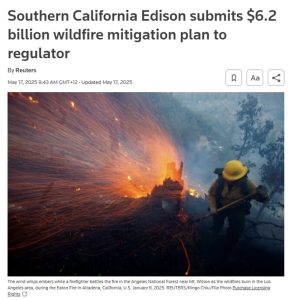
Overseas utilities show how hazard mitigation can be managed as a programme rather than negotiated project by project. Southern California Edison, for example, is combining covered conductors, undergrounding, grid hardening, and climate-informed risk planning through a multi-year programme.
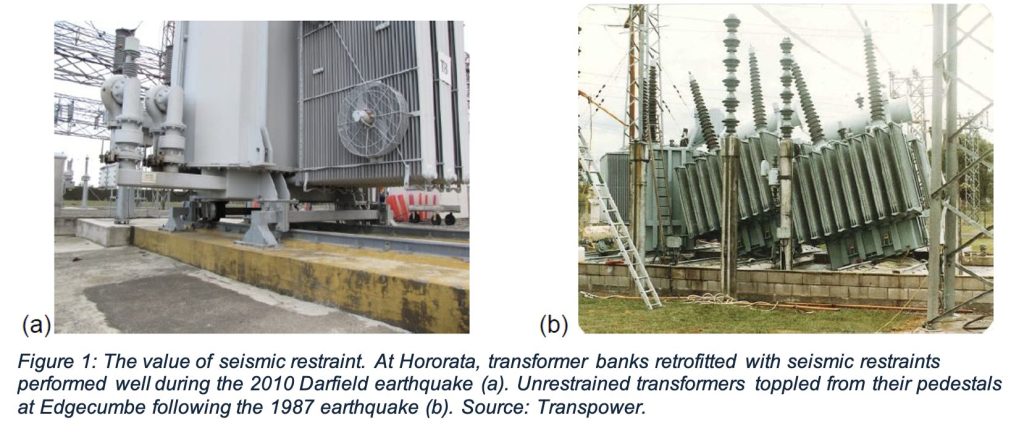
New Zealand has its own evidence that resilience investment pays off. Lessons from the 1987 Edgecumbe earthquake led Transpower, Orion and MainPower to strengthen parts of their networks before the Canterbury earthquakes. Those investments proved their value. Transpower’s seismically restrained transformer banks performed well, while Orion’s upgraded substation buildings suffered very little structural failure despite severe shaking. The same lesson is visible in Transpower’s experience: Figure 10 contrasts seismically restrained transformer banks at Hororata, which performed well during the Darfield earthquake, with unrestrained transformers that toppled at Edgecumbe in 1987.
Clearer design and hazard information also help financiers and insurers understand risk earlier. That earlier understanding supports the wider delivery model by making the programme easier to back.
Start with three practical moves
Energy developers and asset owners can begin now.
- Publish a credible forward workbank against Te Waihanga’s Infrastructure Pipeline.
- Identify which design, consent, and construction inputs can be reused.
- Then test a longer-term panel that brings constructors into the project before design and consent decisions are fixed.
These moves reduce repeated work, expose risks earlier, and improve buildability. They also give the market enough confidence to invest in delivery capability. New Zealand needs energy infrastructure, and it needs a better way to build it.
About the authors
Glen Nicholson | Sector Director – Energy + Industry, Tonkin + Taylor
Glen leads the Energy and Industry Sectors at Tonkin + Taylor, with over 20 years’ experience managing and delivering multi-disciplinary engineering projects across New Zealand. With specialist expertise across energy generation modes and a strong background in environmental science and resource management, he brings particular depth to the environmental and regulatory interface of major infrastructure projects.
Chris Perks | Sector Director – Transport + Delivery Partners, Tonkin + Taylor
Chris is a Chartered Civil Engineer and Sector Director at Tonkin + Taylor with over 20 years’ international experience leading complex, high-value transport infrastructure programmes across New Zealand, Australia, the UK and the Middle East. Combining strategic leadership, commercial acumen and technical credibility, he has grown annual sector revenue from NZD$17m to over NZD$90m and is known for building high-performing teams, mentoring emerging leaders, and driving programme delivery.
James Russell | Sector Director – Finance + Insurance, Tonkin + Taylor
James is a Geotechnical Engineer and Project Director serving as Finance + Insurance Sector Director at Tonkin + Taylor, where he specialises in geotechnical earthquake engineering, risk and forensic engineering, and natural hazard and climate change impact assessment. Working at the intersection of engineering, strategy and commercial decision-making, he shapes the firm’s finance and insurance sector strategy, guides market positioning, and helps clients in New Zealand and internationally manage risk and build long-term resilience.