








New Bridgewater Bridge – Tasmania

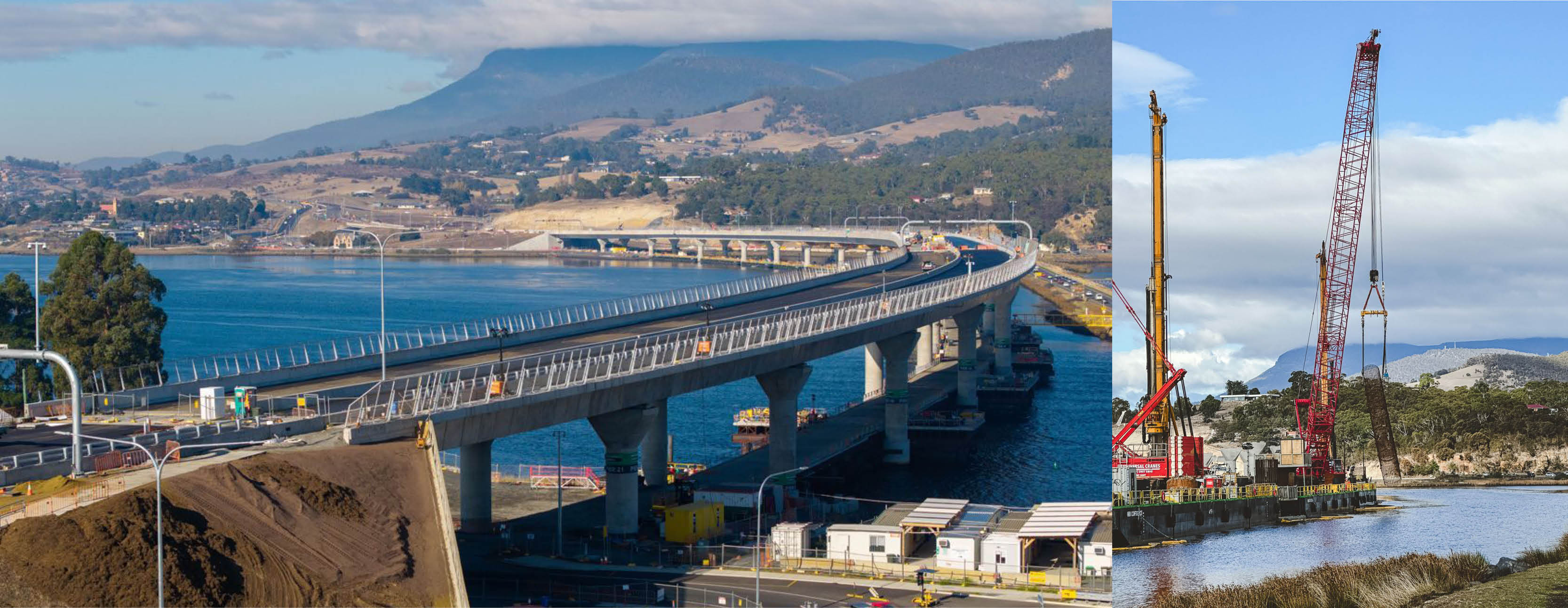
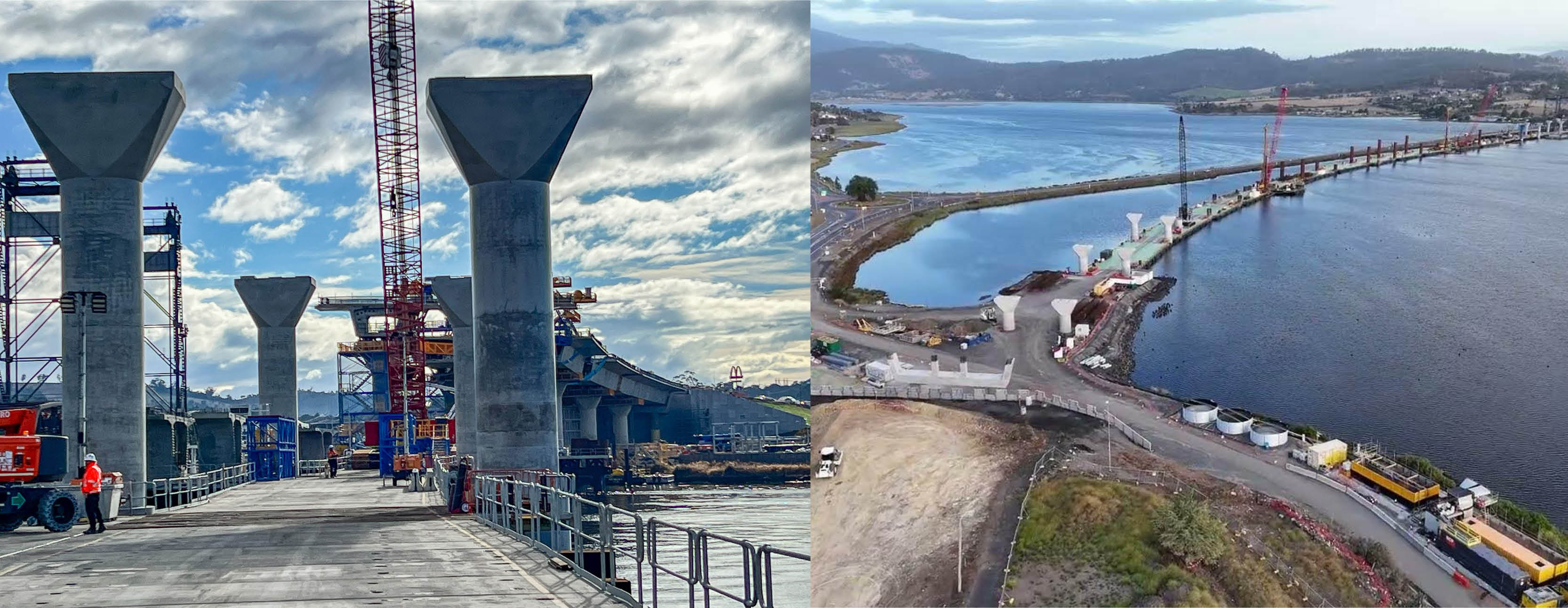
Tasmania’s largest-ever transport infrastructure project – the New Bridgewater Bridge, a 1.28 km, four-lane crossing of the River Derwent that replaces the 1946 steel-truss lift bridge.

Designed to improve safety and reliability for everyone who uses it, the bridge includes a shared walking and cycling path and strengthens the connection between Hobart’s northern suburbs and the Midland Highway.

Tonkin + Taylor was the lead geotechnical designer. We delivered a foundation solution that helped the bridge perform in a challenging river environment, addressing highly variable ground conditions, seismic hazards, and flood-scour risk.

Services

  • Geological / geotechnical investigation / interpretation
  • Retaining walls including large, reinforced soil structure walls
  • Major soil / rock cuts with soil nails / shotcrete
  • Land reclamation
  • Embankment earthworks
  • Deep bridge foundation
  • Seismic geotechnics
  • Numerical modelling
  • Construction support
  • Verification testing

Award

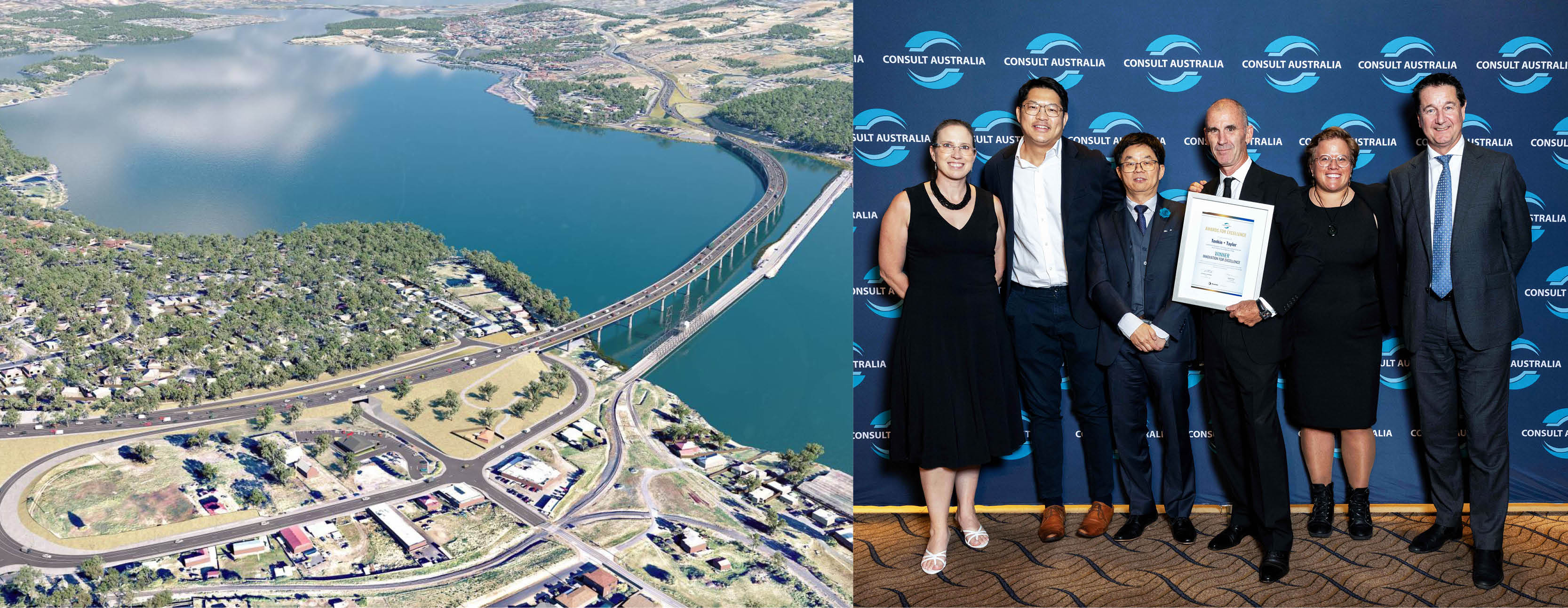
  • 2025–2026 Consult Australia Award for Excellence | Innovation for Excellence

Client

  • McConnell Dowell

Year

  • 2021-2025
New Bridgewater Bridge – Tasmania

Project highlights

  • Large-diameter monopiles up to 91.5 m depth (believed to be the deepest of their kind in the Southern Hemisphere).
  • One-borehole-per-pile investigation approach.
  • O-Cell load testing to verify test pile performance and to enhance programme certainty.
  • All production piles achieved “Class 1” integrity.
  • Design performance exceeded expectations.

The challenge

Building a major bridge over a dynamic river system requires confidence in what lies below the surface and a foundation design that can cope with uncertainty. For the New Bridgewater Bridge, the geotechnical challenge included:

  • Highly variable ground conditions beneath a river environment
  • Seismic hazards (including liquefaction-related ground deformation)
  • Flood scour risk (riverbed erosion during major flows)
  • A need to confirm performance early to avoid redesign, delays and cost escalation during construction

Our goal was to help the project team make informed decisions and deliver a foundation system that was safe, resilient, constructable, and verifiable.

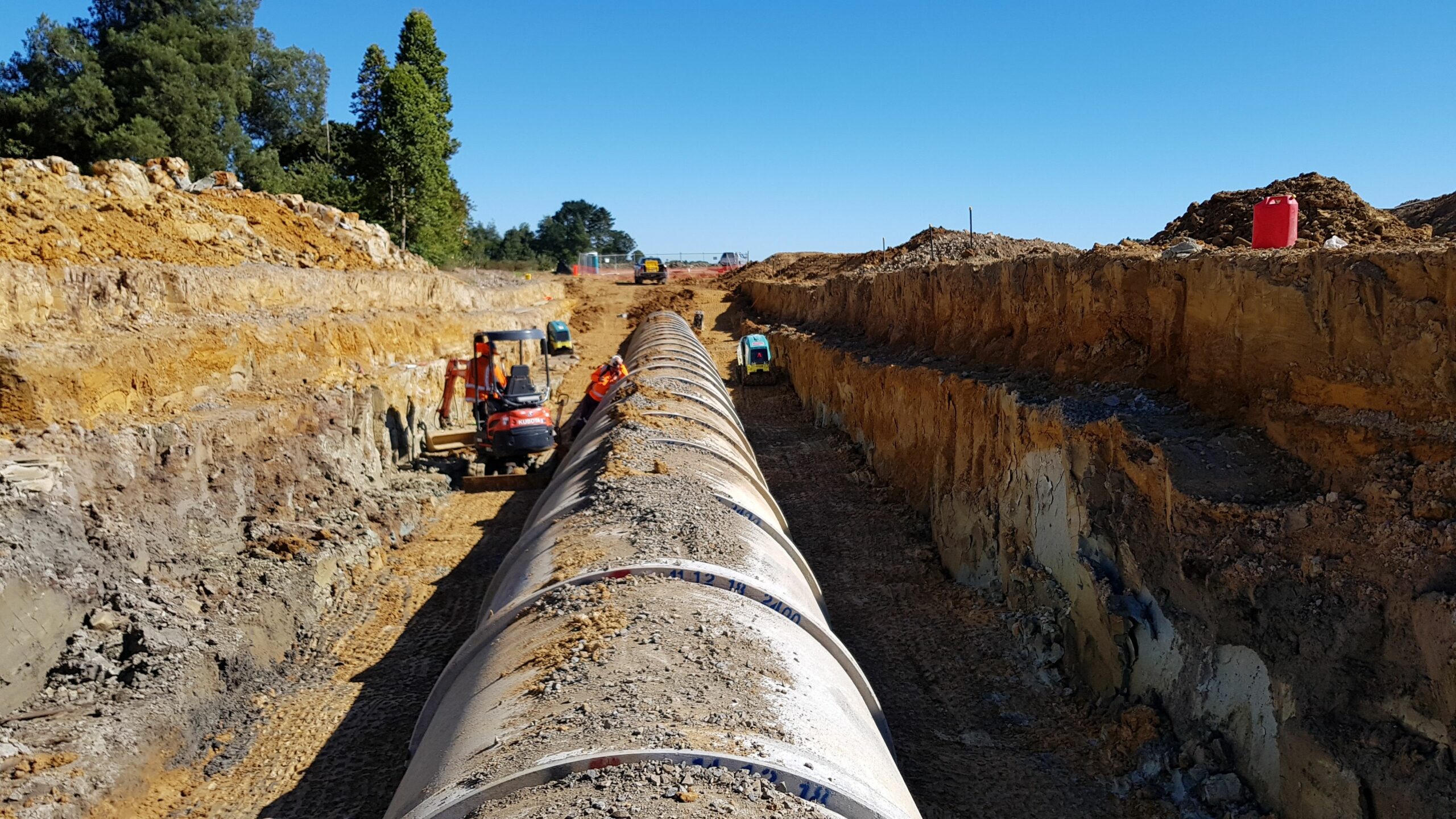
Tasmania’s largest-ever transport infrastructure project – the New Bridgewater Bridge

What we did

Tonkin + Taylor served as the lead geotechnical designer, working alongside the wider project team to design and validate a technically demanding bridge foundation solution. We combined detailed site investigations, advanced ground modelling, innovative interpretation methods, and verification testing to support a “right-first-time” installation approach, reducing rework risk and enhancing programme delivery.

Deep monopile foundation design

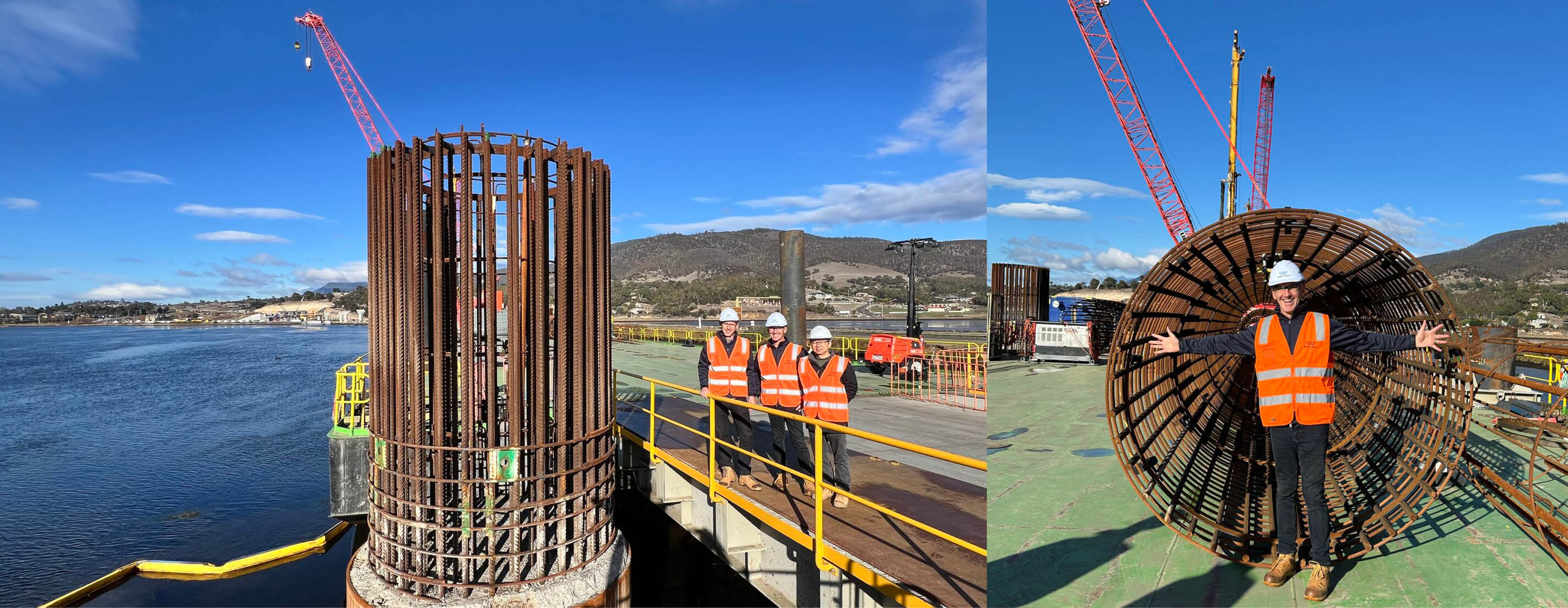
We pioneered the design of large-diameter monopiles reaching depths of up to 91.5 metres, engineered for performance under variable soil and rock profiles, earthquake loading and associated potential ground deformation, and scour and river-driven loading conditions.

Targeted investigation – one borehole per pile: To reduce uncertainty and strengthen design confidence, our approach included one-borehole-per-pile site investigations – providing high-resolution ground information for each foundation location.

3D geological modelling to manage complexity: 3D geological models enabled a clearer understanding of subsurface variability and helped the team align design decisions with real ground conditions.

Novel ground classification and advanced interpretation: Novel classification methods for the Tertiary Sedimentary Breccia were developed, which applied innovative analytical processes to better assess mixed soil-and-rock strength and stiffness – critical for predicting pile behaviour and designing efficiently.

More realistic numerical simulation of pile behaviour: Novel numerical simulation processes were developed to evaluate pile behaviour under multiple loading conditions, improving realism and supporting confident decisions in a complex foundation environment.

Tasmania’s largest-ever transport infrastructure project – the New Bridgewater Bridge

Verification testing that enhanced time + cost

A major breakthrough on the project was the use of O-Cell load testing on four sacrificial piles to verify the design performance of large-diameter production piles. This testing confirmed that pile capacities exceeded the minimum requirements, preventing the need for redesign or lengthening during construction and avoiding potential delays and cost escalation. To confirm build quality, all 46 production piles achieved “Class 1” integrity in Cross-Hole Sonic Logging (CSL) testing, supporting a true right-first-time installation and reducing the need for remedial work.

Outcomes + benefits

Our work helped the project team deliver a foundation system designed and verified for long-term performance in a challenging river environment.

Key outcomes included:

  • Reduced uncertainty through targeted investigations and 3D ground modelling.
  • Verified foundation performance through O-Cell testing, supporting programme and budget certainty.
  • High-quality construction outcomes, with all production piles achieving Class 1 integrity.
  • A solution designed for seismic resilience and scour-related risk in the River Derwent.
  • A comprehensive dataset that provides a valuable reference for future projects in similar river conditions.

Tasmania’s largest-ever transport infrastructure project – the New Bridgewater Bridge

Setting new benchmarks for geotechnical engineering

The New Bridgewater Bridge has set new benchmarks for geotechnical design and verification in complex geological conditions and river environments. The depth of the monopiles, the investigation strategy, and the testing-led validation approach have helped establish a stronger evidence base for bridge foundation design, supporting designers and asset owners on future projects worldwide.

Led by Dr Daiquan Yang – Senior Principal, Technical Director, and Project Director – the team worked closely with project partners to develop innovative approaches to overcome the complex geotechnical, scouring and seismic challenges of the site.

Daiquan shared: “It’s been a privilege to contribute to such a transformative project. The geotechnical complexity of the site demanded innovative thinking, expertise, and close collaboration. Seeing the New Bridgewater Bridge being recognised at the highest level is a proud moment for me and everyone involved.”

Innovation for Excellence Award: What this recognition means

Tonkin + Taylor’s contribution to the project was recognised with the 2025–2026 Consult Australia Award for Excellence | Innovation for Excellence, reflecting the value of combining innovation, engineering rigour, and collaborative delivery to achieve better outcomes.

“This achievement reflects what can be done when innovation, engineering excellence, and collaboration come together. The New Bridgewater Bridge shows that world-class engineering can deliver safer, greener, and smarter infrastructure.” Tim Fisher, Group Managing Director, Tonkin + Taylor, said.

The project’s success establishes a lasting legacy, a proven model for delivering infrastructure that is cheaper, faster, more resilient and more reliable. The New Bridgewater Bridge stands as both Tasmania’s largest infrastructure investment and a landmark of Australian engineering excellence.

Tasmania’s largest-ever transport infrastructure project – the New Bridgewater Bridge

Contact us

If you’re planning a new project, we’re here to help. Contact our team here.


Explore geotechnical engineering

Explore More Projects

LEAD Housing Development Programme, Auckland

LEAD Housing Development Programme, Auckland

Drury South Crossing Precinct

Drury South Crossing Precinct

previous arrow
next arrow

How can we help?

Get in touch with a Tonkin + Taylor representative today. Our friendly and knowledgeable team make it easy to find the right solution to suit your specific needs.

Get In Touch