







Integrating climate disclosures into the Annual Report for the South Island’s primary gateway port.
“The regulatory change gave us an opportunity to rethink how we tell our climate story. Rather than a separate document that stakeholders have to track down, we wanted climate disclosure woven through our Annual Report in a way that actually makes sense for different readers. Tonkin + Taylor built the architecture to do that and gave us a template we can build on every year.” – Dr Crystal Lenky, CEnvP, Head of Environment and Sustainability.
Services continued:
  • Section-by-section integration wireframe across eight Annual Report sections
  • Language and legal risk architecture covering voluntary nature statements, forward-looking disclaimers, NZ CS 1 reference language, adoption provision wording
  • Navigation and cross-referencing framework with draft NZ CS 1 content index template
  • Review of draft FY26 Annual Report for conformance with wireframe recommendations and FMA best-practice standards

Services

  • Desktop review of LPC’s FY25 Annual Report and climate-related disclosures against best-practice voluntary reporting guidance
  • Benchmarking against comparable New Zealand voluntary reporters
  • Content mapping against the four NZ CS 1 thematic areas (Governance, Strategy, Risk Management, Metrics & Targets)
  • Research and analysis of continuing legal obligations for voluntary reporters (Financial Markets Conduct Act, NZX Corporate Governance Code)
  • Three-level disclosure hierarchy design (L1 strategic narrative / L2 structured summary / L3 technical appendix)

Client

  • Lyttelton Port Company

Year

  • June 2026

The challenge

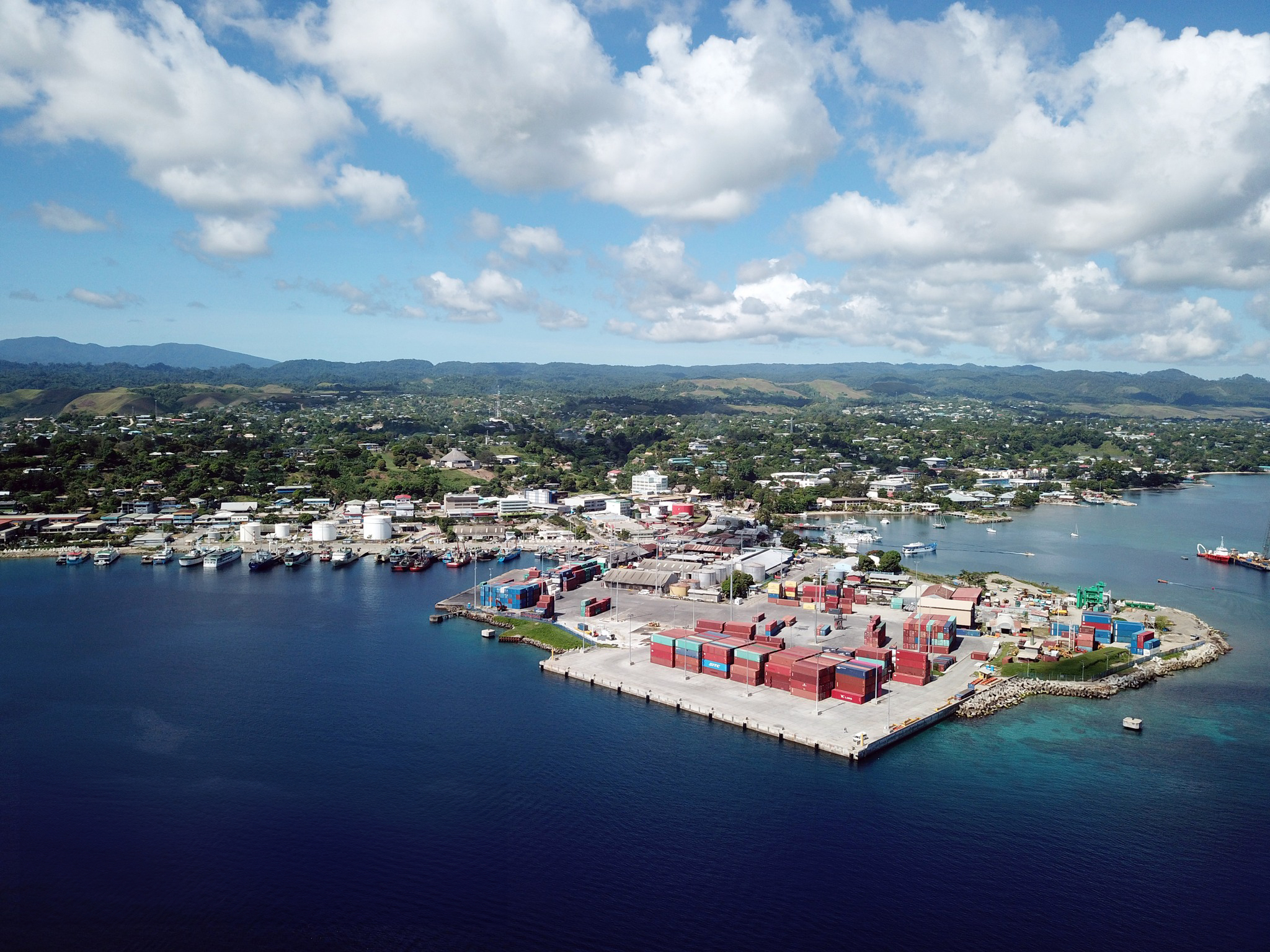
Lyttelton Port Company (LPC) is the South Island’s primary gateway port and a critical piece of infrastructure for Canterbury’s economy and New Zealand’s supply chains. As a subsidiary of Christchurch City Holdings Limited (CCHL), LPC had been preparing climate-related disclosures (CRD) under Aotearoa New Zealand Climate Standards (NZCS) to support CCHL’s mandatory reporting obligations.

That landscape shifted in October 2025, when the Government proposed raising the mandatory CRD threshold. The change took both CCHL and LPC outside the mandatory regime, but LPC’s commitment to transparency didn’t change. LPC remains committed to voluntary disclosure to meet CCHL’s expectations, support its own strategic goals, and serve the investors, lenders, and community stakeholders who rely on the port.

The existing disclosure model had a structural problem. A standalone CRD document that cross-referenced the Annual Report had become fragmented, duplicative, and time-consuming to rebuild each year. As LPC prepared its FY26 Annual Report, it had a clear opportunity to fundamentally redesign its approach.
The challenge was substantial. LPC’s five-capitals reporting framework didn’t map neatly to the four NZ CS 1 thematic areas. Continuing legal obligations under the Financial Markets Conduct Act and the NZX Corporate Governance Code still applied to voluntary reporters, meaning careless framing carried real legal risk. The finance team also needed to be drawn actively into the CRD process, particularly for the Financial Statements Note 1.
LPC needed expert guidance to navigate all of this within a tight annual reporting timeline.

Our solution

Tonkin + Taylor delivered a structured two-phase programme, drawing on deep expertise in climate-related financial disclosures and New Zealand regulatory requirements.
Phase 1 began immediately after engagement. Tonkin + Taylor completed a comprehensive desktop review of LPC’s FY25 Annual Report and CRD against best-practice guidance for voluntary reporting. We mapped existing climate content against the four NZ CS 1 thematic areas, identified gaps and priorities, and benchmarked LPC’s approach against comparable New Zealand organisations, including Port of Tauranga and Meridian Energy. That benchmarking confirmed that no comparable New Zealand port had yet fully integrated substantive climate disclosure throughout its annual report. LPC had an opportunity to lead the way.
Phase 2 delivered the architecture to do exactly that. Tonkin + Taylor designed a layered integration model with a three-level disclosure hierarchy calibrated to serve different reader audiences.
  1. The level 1 layer carries the strategic narrative, embedded in the Chair/CEO Statement and Our Strategy sections.
  2. The level 2 layer provides structured summary-level content across the Kaitiakitanga, Our Governance, and Top Strategic Risks sections.
  3. The level 3 layer is a separately published Climate Disclosure Appendix that contains technical details for regulators and analysts.
A section-by-section integration wireframe then guided LPC’s reporting team through eight Annual Report sections, specifying what content should appear, at what depth, in what format, and how sections cross-reference each other.
We also mapped the continuing legal obligations that apply to voluntary reporters and provided precise language guidance at every sensitive point in the report. This ran from the voluntary nature statement and forward-looking disclaimer through to NZ CS 1 reference language designed to avoid inadvertent compliance claims. Each element was designed to reduce exposure under the Financial Markets Conduct Act’s fair dealing provisions while maintaining credibility with sophisticated stakeholders.
As a final step, Tonkin + Taylor reviewed LPC’s draft FY26 Annual Report against the wireframe recommendations. We confirmed that the draft had largely incorporated the structured approach and provided targeted guidance on the quality of physical risk disclosure, GHG comparative data, and the evolution of the transition plan, all consistent with the Financial Markets Authority’s May 2026 CRD Insights Report.

The outcome

LPC’s FY26 Annual Report breaks new ground. The integrated disclosure approach, with climate content embedded throughout the report at three distinct levels of depth, makes LPC the first comparable New Zealand port to move beyond cross-referencing a standalone CRD document. It’s a meaningful step forward for voluntary disclosure practice in the New Zealand port and infrastructure sector.
The reusable, templated three-level framework is designed to reduce the reporting team’s effort year on year. What was previously a labour-intensive, annually rebuilt standalone document becomes an efficient, structured process with language guidance, a cross-referencing system, and a draft NZ CS 1 content index already built in.
The legal risk architecture built into every sensitive framing decision reduces LPC’s exposure to the greenwashing risk faced by voluntary reporters under New Zealand’s fair dealing provisions. And the depth of physical risk disclosure showed authentic transparency: the draft Annual Report included approximately $5.7 million in actual climate-related financial impacts from FY26 storm events, which is exactly the kind of tangible, decision-useful disclosure the FMA’s 2026 Insights Report identifies as leading practice.
Whilst not all aspects of the wireframe recommendations could be integrated into the FY26 annual report, LPC has committed to iterative development that will see the content improved year-on-year to ensure that current guidance and expectations for credible, robust climate disclosures are incorporated.
For LPC’s stakeholders (investors, lenders, CCHL, Christchurch City Council, and the Canterbury community), the integrated Annual Report makes the port’s climate risk exposure and strategic response genuinely accessible. Not buried in an appendix that few readers find, but present in the sections of the report where it matters most.

Explore More Projects

Ōpōtiki District Council Infrastructure Strategy + Long-Term Plan Support (NZ)

Ōpōtiki District Council Infrastructure Strategy + Long-Term Plan Support (NZ)

Transport Sector Project Development Facility – Solomon Islands

Transport Sector Project Development Facility – Solomon Islands

Pacific Regional Waste Programme National Audits – Pacific-wide

Pacific Regional Waste Programme National Audits – Pacific-wide

East Coast Road Slope Stabilisation + Feasibility Study – Samoa

East Coast Road Slope Stabilisation + Feasibility Study – Samoa

Integrated urban resilience sector project – Tonga

Integrated urban resilience sector project – Tonga

Aitutaki Climate Change Risk Assessment + Design

Aitutaki Climate Change Risk Assessment + Design

Affordable Coastal Protection for Pacific Island Nations

Affordable Coastal Protection for Pacific Island Nations

Manase Beach Replenishment + Coastal Protection, Savai’i, Samoa

Manase Beach Replenishment + Coastal Protection, Savai’i, Samoa

Republic of the Marshall Islands Urban Resilience Project – Component 2

Republic of the Marshall Islands Urban Resilience Project – Component 2

previous arrow
next arrow

How can we help?

Get in touch with a Tonkin + Taylor representative today. Our friendly and knowledgeable team make it easy to find the right solution to suit your specific needs.

Get In Touch