




Project overview

Te Ara Awataha Northcote Greenway is a stunning 1.5km blue-green corridor that links Northcote’s new and existing parks, homes, neighbourhoods and schools. The greenway is an outstanding nature-based engineering solution to a pressing urban issue: enabling more homes in liveable communities, while protecting them from extreme weather events.

This is an integral part of the Northcote Development, a transformational programme that will ultimately deliver thousands of new community houses, affordable and market homes on Auckland’s North Shore.

Services

  • Civil
  • Ecology
  • Environmental
  • Geotechnical

Client

  • AUDO (Auckland Council’s Urban Development Office) and Kāinga Ora as part of the Auckland Housing Programme – Northcote Development

Other parties involved:

  • Woods (Stage 1), Isthmus, LEAD Alliance (formerly Piritahi)

Location:

  • Auckland, New Zealand

Year

  • 2018 – 2023

Daylighting the Awataha Stream

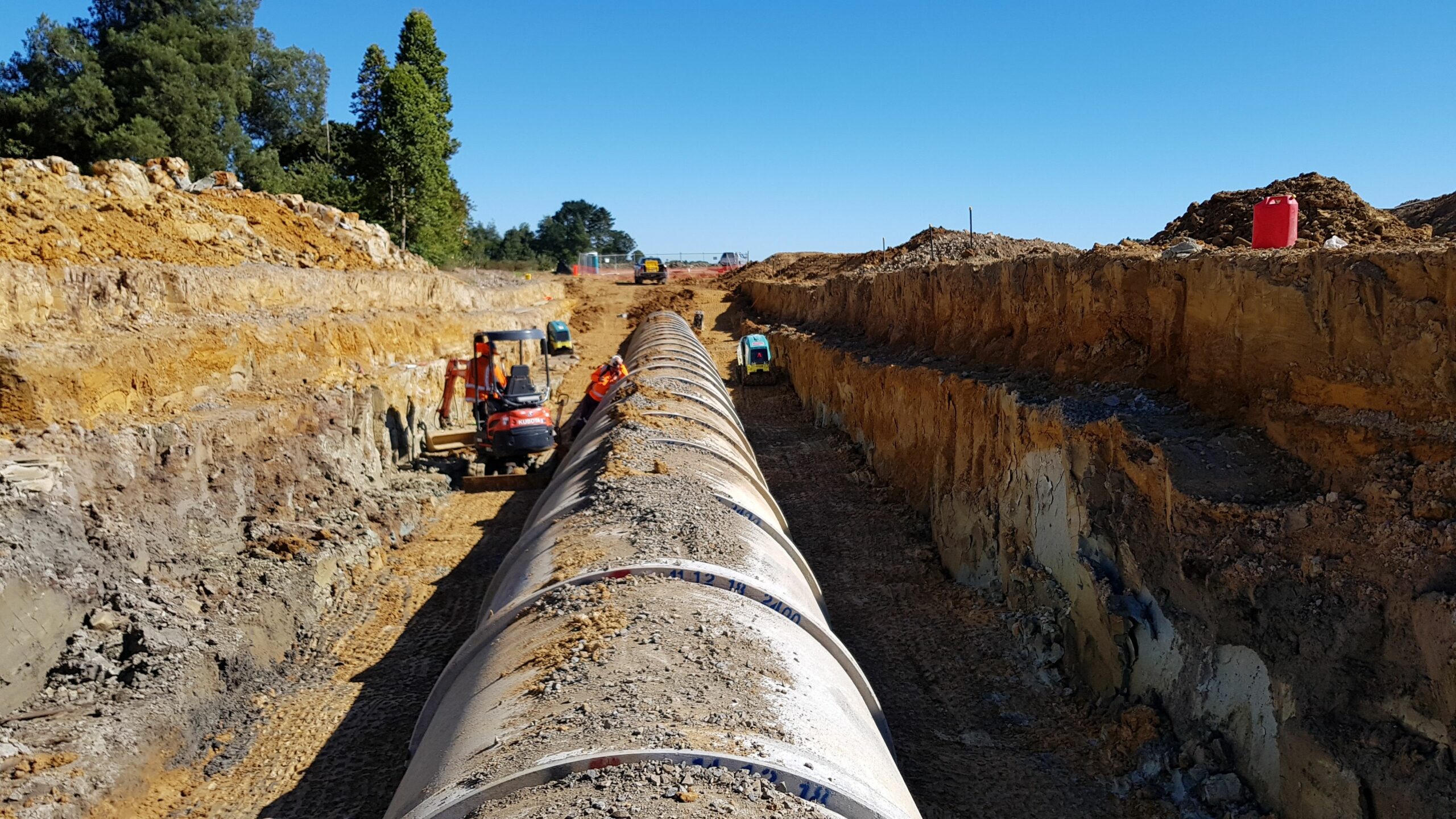
Awataha Stream, once a natural spring-fed stream, was confined underground in a concrete pipe for seventy years, buried beneath roads, homes, and the Northcote Town Centre. This contributed to frequent flooding of homes and businesses during heavy rain.

The challenge was to unlock this hidden waterway and transform the corridor above it into a community greenway: a place where walking, cycling, ecology, and education could coexist.

Working alongside Woods in the initial stages, and then later as an embedded part of the LEAD Alliance (the integrated delivery vehicle bringing together Kāinga Ora’s construction and design partners), Tonkin + Taylor contributed civil, ecology, environmental and geotechnical engineering services across the project lifecycle – from the initial stream daylighting feasibility study through to design, construction monitoring, and project completion certification.

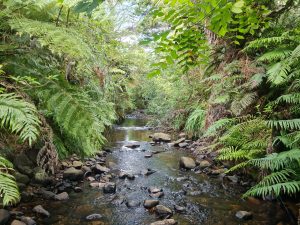
Freshwater ecologists and fluvial geomorphologists assessed the stream daylighting feasibility early in the programme, informing the design of a natural open channel approx. 280 m in length. Where once a concrete pipe carried water unseen, the stream now flows openly, easily viewed from pedestrian bridges, and enjoyed daily by school students and the community.

Engineering the Greenway

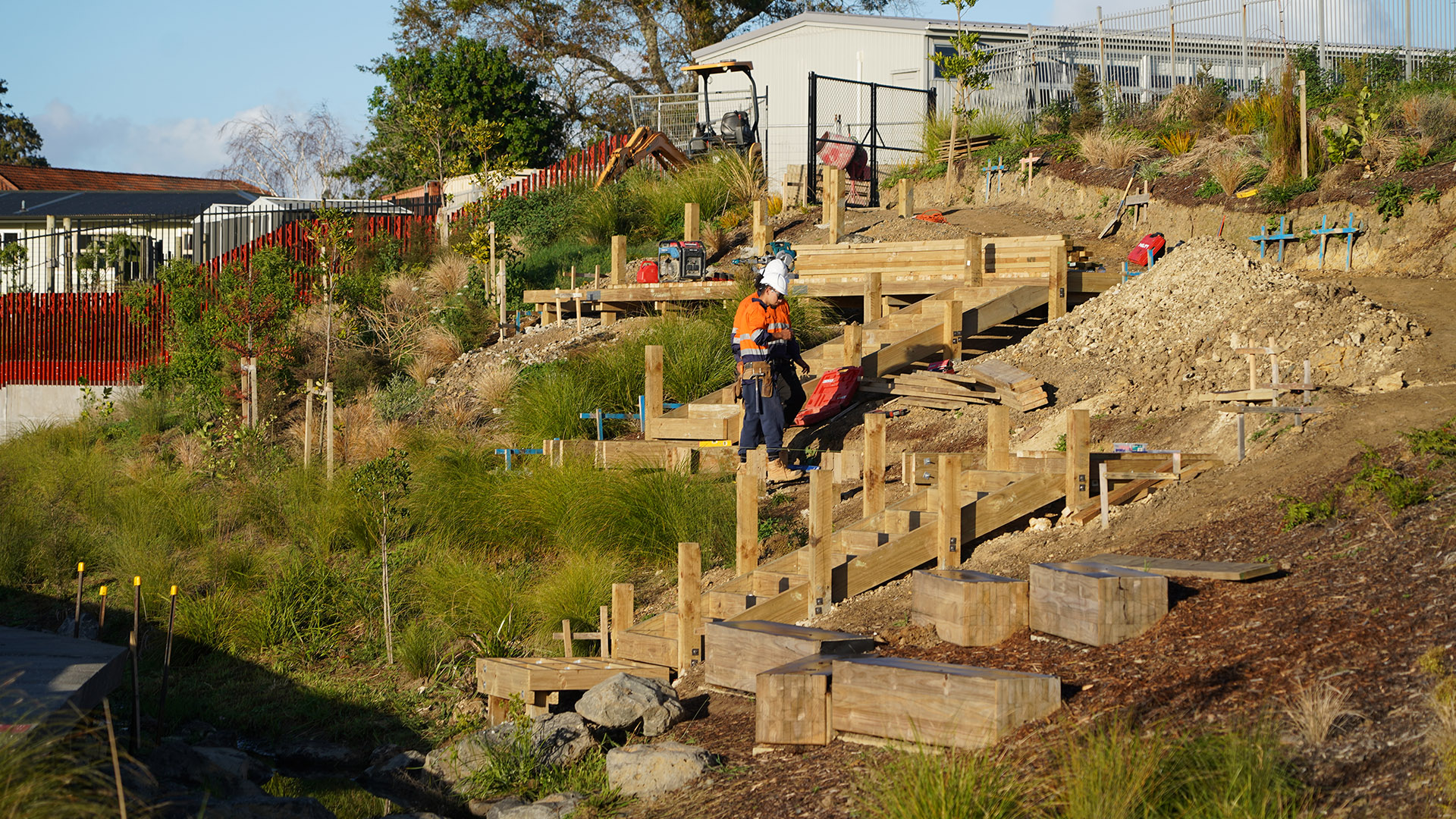
Delivering the greenway required careful geotechnical and civil engineering. The team contributed to the design and monitoring of a diverse suite of retaining structures, bridges, and amenity platforms across a challenging Auckland volcanic hillside terrain. Works included:

  • Northern and southern stormwater diversions to enable stream daylighting.
  • Multiple retaining wall systems including reinforced concrete piled walls and native timber pole walls with culturally resonant ponga log facings.
  • The Cadness Bridge – a timber pedestrian bridge spanning the restored stream, with concrete piled abutments.
  • The Awa Crossing – a seasonal culvert crossing with footpath access.
  • Puna 2 – an elevated viewing/gathering platform over the stream.
  • An outdoor classroom deck serving both Northcote Intermediate and Onepoto Primary Schools.
  • Walking and cycling paths with paving, steps, and landscaping throughout.

Ecological restoration

The daylighting of the Awataha Stream is a significant ecological achievement. Re-establishing the stream as an open waterway, the project restores stream habitat, supports aquatic biodiversity, and improves water quality outcomes in the catchment. This, combined with other stormwater network improvements at Northcote, achieves stormwater conveyance and flood mitigation.

Instream features were specifically designed to provide a dual benefit; increasing stream resilience from erosive forces associated with urban stormwater run-off, while providing species specific habitat for aquatic fauna.

Our ecologists and fluvial geomorphologists also worked closely with the landscape designers to ensure the native planting will support in-stream habitat evolution as it establishes over time.

Sustainability in design

Sustainability was embedded in the design philosophy and implemented through strong collaboration with Contractors.

  • Stream restoration: natural stream channels were developed using an organic approach to methods and materials, returning the Awataha awa to a living, visible waterway.
  • Use of timber retaining structures as durable, lower-carbon alternatives to full concrete walls.
  • Ponga log wall facings referencing natural, sustainable and culturally significant materials.
  • Active transport (walking and cycling) infrastructure supporting low-carbon travel habits.
  • Use of locally sourced basalt excavated from nearby projects.
  • Hand placement of rock riffle and log features for fish passage.

Cultural significance

Mana whenua played a central role in shaping the integrated mauri outcomes for the Greenway, drawing from co-design workshops led by Isthmus, and discussions with the Mana Whenua Kaitiaki Project Working Group, the Kaipātiki Local Board Working Group, a Community Reference Group and neighbouring schools.

The project is named and designed to reflect the cultural significance of the Awataha Stream. Te Ara Awataha (The Path of the Awataha) honours the stream’s identity as a taonga (treasure) in the landscape. The naming of key features – Puna 2 (spring/water source), Awa Crossing (river crossing) – in te reo Māori reinforces the project’s connection to the history and identity of the place, and to the aspirations of mana whenua for the restoration of this awa.

The use of ponga log wall facings in the retaining structures also carries cultural resonance, connecting the engineered landscape to traditional Māori materials and design practices.

Education

The outdoor classroom decking platform – positioned where students from Northcote Intermediate and Onepoto Primary schools can step directly from the school boundary onto the Greenway – creates a living outdoor learning environment. Children can observe the restored stream, engage with native planting, and connect environmental science learning with their local landscape.

The outcome

Dramatic revitalisation of the stream through daylighting and riparian planting has increased its capacity to convey floodwaters. During high rainfall events, instead of flooding homes, stormwater now has room to move and flows through the channel, constrained by upper banks, rather than pipe walls. More birds, insects and fish have been attracted to this exceptional ecological corridor, which now provides a safe place to roam in a shared urban backyard.

The project has provided impressive new spaces to explore, play, walk, cycle and learn, delivering the community connections and unparalleled amenity that supports growth, resilience and liveability.

Project awards:

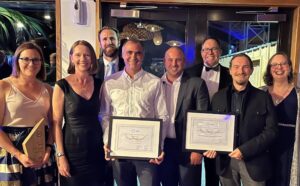
  • 2023 IPWEA NZ Asset Management Excellence Awards:
    • Excellence in Water
    • Best Infrastructure Project over $5 million
    • Asset Management Excellence Supreme Award
  • 2023 Water New Zealand Environmental Sustainability
    • Project Award
  • 2023 Featured in the Climate Resilient Infrastructure

Report series, by the International Coalition for Sustainable Infrastructure, launched at COP 28 – the UN Conference on Climate Change.

Explore More Projects

LEAD Housing Development Programme, Auckland

LEAD Housing Development Programme, Auckland

Drury South Crossing Precinct

Drury South Crossing Precinct

previous arrow
next arrow

How can we help?

Get in touch with a Tonkin + Taylor representative today. Our friendly and knowledgeable team make it easy to find the right solution to suit your specific needs.

Get In Touch