search

The built environment sector employs a significant portion of workers across New Zealand and Australia. While we directly influence only our own team members, our connections with partners, peers and industry organisations allow us to champion the built environment workforce more broadly.

The built environment workforce – engineers, scientists, contractors, field technicians, materials manufacturers, project managers, and many more – can realise positive outcomes for themselves, whanau (family), and communities. These can include financial security, capability building, social connection, and a sense of purpose in contributing to the built environment we all live in.

To enable these positive outcomes, the sector also needs to address persistent challenges, such as lack of diversity, lack of pathways into skilled work, and health, safety, and wellbeing concerns.

How we manage supporting the built environment workforce

We’re tackling this within our organisation by creating inclusive environments and exemplary practices, and across our industry by sharing learnings and supporting sector wide initiatives.

Within Tonkin + Taylor Group

We’re committed to creating environments where everyone feels safe and included and to measuring and reporting on our progress. Our Code of Conduct sets out our expectations of our people and suppliers. We take instances of behaviour contrary to our Code of Conduct and related policies seriously, with reporting through managers or directly to our Ethics Committee. Our 24/7 wellbeing service is also available for immediate assistance and support.

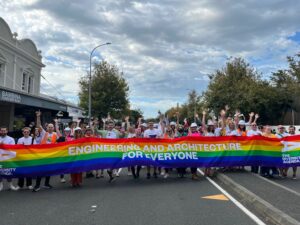
We have established a range of internal networks to support and inform our activity. The networks include formalised committees and informal communication channels for members and allies of specific communities, including Rainbow, family, neurodivergence, and loved-ones overseas. These networks provide a place to come together and support one another, as well as provide direct feedback on what’s working and areas we need to focus on.

Looking after the health, safety, and wellbeing of our people

We approach Health, Safety and Wellbeing (HSW) with a Groupwide lens to facilitate consistency, whilst accommodating flexibility for each location to focus on what is most important for them to manage risk based on their working environments.  This is guided by New Zealand and Australian regulatory requirements such as the Work Health and Safety Act 2011 and Workplace Injury Management and Workers Compensation Act 1998 in Australia and New Zealand Health and Safety at Work Act 2015 and Accident Compensation Act 2001, alongside recognised industry best practice. We maintain a robust HSW management system certified to ISO 45001, hold top scores in both Totika and Site Wise, and have achieved a 5star IMPAC prequalification rating in NZ.‑star IMPAC prequalification rating in NZ.

We believe that focusing on our people and providing safe, supportive workplaces—both physically and psychologically—builds a positive culture and delivers strong outcomes for employees, clients and our business.

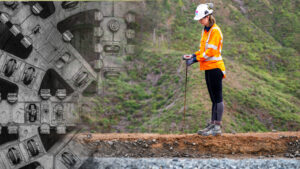
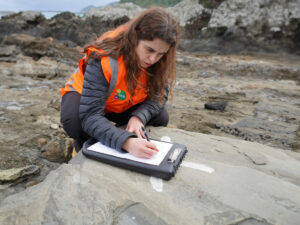
Our teams work across diverse environments, from active construction sites to greenfield and domestic settings, each presenting unique risks. Our critical risk framework tailors these risks to each trading company, supported by targeted training and tools that strengthen understanding and implementation of critical controls.

A key focus of our approach is understanding work as done, rather than work as imagined, ensuring our systems and controls account for human error while continuously improving safety as we grow and mature.

We operate a structured, HSW training framework, built on three levels of training (awareness/knowledge and competence) enabling our employees to develop the required skills and knowledge to work in a healthy and safe way.  It incorporates new employee, mandatory and repeat refresher training to ensure ongoing capability and aligns with applicable legislation, industry best practice and our core values.  Training is delivered using a blended approach that combines e-learning, workshops, toolbox talks and ongoing coaching combined with external training as required and our learning management system enables us to keep employee training information up-to-date.

Targets:
Leading Indicators:

  • 50% reduction in manual handling injuries (vs. 2025 baseline)
  • ≥ 90% corrective actions completed by due date

Lagging Indicator:

  • Total Recordable Injury Frequency Rate (TRIFR) ≤ 8.92 per million hours worked (1.78 per 200,000 hours)

See our HSW policy, which applies to people working in, for and on behalf of Tonkin + Taylor Group and our operating companies, and ISO45001 certification here.

Developing our people

Our success depends on our people — their knowledge, skills, and the experience they build throughout their careers. We know that development helps our people stay engaged and perform at their best, and it is also an important factor for those choosing to join Tonkin + Taylor Group.

As our industry continues to evolve, we help our people grow through learning on the job, learning from others, and accessing quality development resources. Guided by our values of being empowered to deliver and achieving excellence every day, we provide practical learning opportunities that support career growth and adaptability.

We monitor our progress through employee feedback, participation in learning programmes, and retention rates to ensure our approach continues to meet the needs of our people.

Building Professional Capability

  • Summer Intern Programme – Meaningful project experience, site visits, and industry connections that help grow future talent.
  • Graduate Programme – A three-year framework that provides technical learning, mentoring, and support to start strong careers.
  • Project Management Pathway – A structured programme to build the skills and confidence of emerging Project Managers and Directors.
  • Centres of Technical Excellence – Specialist groups that develop and share technical expertise, lead research and innovation, and collaborate with industry and universities.

Developing Career and Leadership Skills

  • Mentoring – Group and one-on-one mentoring for people at different stages of their careers, including support during transitions.
  • Portfolio Careers – Short-term roles in different business areas that broaden experience and understanding of operations.
  • People Leaders – Resources and programmes for new and experienced leaders, combining online learning, workshops, and peer support.

Diversity, inclusion, equity, and belonging

At Tonkin + Taylor Group, we celebrate what makes our people unique – their experiences, ideas, and perspectives. These differences come together to form diverse teams of experts who deliver exceptional outcomes for our clients, our communities, and the environment.

We take a broad approach to learning and development, focusing not only on technical skills but also on inclusion and cultural competence. By equipping our employees with the knowledge and tools to navigate and understand diverse perspectives, we create a safe and supportive environment where everyone feels empowered to contribute their best work.

We’re tracking our progress annually quantitatively and through feedback we receive from our people via our employee networks and engagement surveys.

GenderTick

We are GenderTick accredited, acknowledging we show leadership in gender equality. GenderTick assessed us on equal pay, leadership representation, flexible work and leave, gender-safe workspaces and gender-inclusive culture. The process helped us see what we’re doing well and how we can improve. This work doesn’t stop with accreditation. We continue to strive for equity for all genders, and our work in this space will be reviewed to meet continual improvement requirements.

Measuring our Gender Pay Gap

We monitor our Gender Pay gap, as we are committed to fair representation and reward. Closing the gap begins with understanding norms in our organisation, industry and society that create gender pay disparity. We intentionally committed to our methodology before seeing the numbers, ensuring an objective approach that prevents results-driven adjustments and enables meaningful cross-organisation comparisons. We recognise this work doesn’t yet represent all genders or other intersectional factors like ethnicity and disability. We’re committed to inclusivity and fairness for all staff and plan to expand data collection and reporting to encompass the experiences of all in our workforce.

In 2024, we also supported Manatū Wāhine Ministry for Women New Zealand to develop a consistent methodology for a gender pay gap toolkit. The resulting toolkit, launched in November 2024, includes practical resources like an online pay gap calculator, data preparation workbook, and self-assessment questionnaire — everything organisations need to measure accurately and consistently. This initiative exemplifies our belief that industry-wide challenges require collective solutions. By helping establish a common language for discussing pay equity, we’re contributing to more transparent, fair workplaces across New Zealand.


Working with our industry

We’re working to support the built environment workforce through a range of initiatives, including supporting professional associations, universities and programmes that encourage students into STEM careers, and professional development for our people.

We believe that promoting diversity, equity, inclusion, and belonging (DEIB) can play a crucial role in achieving better outcomes throughout the workforce. As part of the Diversity Agenda Accord (Accord), which includes the Association of Consulting and Engineering New Zealand (ACE NZ), Te Ao Rangahau Engineering New Zealand (ENZ), and Te Kāhui Whaihanga New Zealand Institute of Architects (NZIA), we are working to improve outcomes in our own business while also supporting improving outcomes across the sector. We are proud to have had a team member on the Diversity Agenda Steering Group since its inception in 2022, actively contributing to these efforts. This helps us shape our own actions to reflect the needs and expectations of our stakeholders.

Health and safety by design

As a lot of our work involves the design of physical assets, delivering healthy and safe designs is crucial in protecting the well-being of all stakeholders involved in a project, from construction workers to end-users. Health and Safety by Design (HSBD) is a core part of our project delivery approach and a legal obligation under the New Zealand Health and Safety at Work Act 2015. It ensures that health and safety risks are identified, assessed, and managed through the design process – starting from concept and continuing through to construction, operation, and decommissioning. Our standard operating procedure and suite of internal and external resources for HSBD help our people to consider health and safety in their work. Our technical support and knowledge sharing, project review, and continuous improvement processes help ensure high quality implementation of HSBD and enable sharing of learning and best practice across projects and teams.

Diversity Agenda Accord

Our involvement in the Diversity Agenda Accord is central to how we are supporting better outcomes across the built environment workforce. The Accord enables us to connect with like-minded organisations and work together to create a more diverse and inclusive workforce for our industry.

Future workforce

We are committed to providing pathways for underrepresented groups into our sector and actively contribute to this work through supporting initiatives that promote STEM in schools, as well as through a range of targeted partnerships. We also partner with the University of Auckland and the University of Canterbury, offering financial contributions and engagement with our people, such as through mentoring opportunities and events.

Amotai

We partner with Amotai in New Zealand to support increasing the participation of indigenous businesses in our supply chain.

Addressing risks of modern slavery

We’re committed to identifying and mitigating modern slavery risks throughout our operations and value chain. Our Modern Slavery Framework outlines our commitments, processes, and activities to support this. Our Modern Slavery Working Group comprises members across Tonkin + Taylor Group and meets quarterly.

As part of supplier selection, potential suppliers must answer modern slavery-related questions. Our training for staff involved in procurement activities also includes a section outlining the risks of modern slavery.

Honouring indigenous perspectives

Our commitment to indigenous peoples is about meaningful integration of cultural knowledge and perspectives into our organisational DNA. Our commitments are outlined in our Indigenous position statement, Te Tiriti o Waitangi statement, and Reconciliation Action Plan.

We are actively working to integrate these insights into our projects through collaboration, cultural competency development, and supporting indigenous leadership in projects.

Our Indigenous Policy Statement

Tonkin + Taylor Group is committed to supporting the strategies and aspirations of indigenous communities.

We strive to make Tonkin + Taylor Group a place where indigenous principles, voices, knowledge and outcomes shape our work ethic as well as the projects entrusted to us. Through respect, good faith and cooperation we will contribute to the correction of historical injustices. We commit to leaving a positive footprint and constructing a long-lasting legacy that honours and uplifts indigenous communities. We believe that meaningful relationships and supportive actions are instrumental in establishing long-lasting strategic partnerships. We are dedicated to fostering the growth of indigenous leaders, so they are equipped to carry the mantle of their elders and set the course for generations to come.

Te Ao Māori perspectives

We are committed to upholding Te Tiriti o Waitangi, acting in good faith with mana whenua (people of the land) in the work we do, and supporting Māori leaders to carry the mantle of their tupuna (ancestors) and shape the direction for future generations.

In 2024, we developed Te Kōrihi o Te Manu, our Māori Strategy, and established a network of Kaupapa Māori champions across our New Zealand consulting business. The strategy sets out how we will build on recent achievements, developing our people’s understanding, establishing how we naturalise Te Ao Māori into our day-to-day operations, and how we deliver our work with clients.

Aboriginal and Torres Strait Islander perspectives

We’re committed to understanding First Nations people’s experiences, how we can be inclusive and contribute to national reconciliation.

We launched our first ‘Reflect’ Reconciliation Action Plan (RAP) in 2023. We’re now working on our next ‘Innovate’ RAP.

Tracking our progress

We track the profile of our people, inclusion of underrepresented groups in our hiring and turnover, and gender pay gap.

To gain insight into the experiences of our people, we have targeted questions in our annual employee engagement survey and regular DEIB surveys.

For sector-wide improvement, we support the Diversity Agenda Accord reporting. We see reporting as an important early step in improving outcomes for the built environment workforce, and aim to see increasing numbers of companies reporting through the Accord.

See here for more on the profile of our people.

Looking for innovative and sustainable solutions for your next project?

Get in touch – together we create and sustain a better world.

Contact Us
Close Menu