search

Our vision is to be Oceania’s best environmental and engineering partner. We specialise in all earth science fields and offer a range of services to meet environmental challenges within the geo, bio, hydro, and atmosphere. We also take the importance of environmental protection into all our work.

We work with clients to identify and address potential environmental impacts early, helping to reduce risks and improve outcomes. By embedding nature into design decisions, we can support infrastructure that not only meets human needs but also contributes to the health of ecosystems. This approach enables us to deliver more sustainable, place-sensitive solutions.

How we manage taking care of nature in the built environment

Our impact on nature is indirect and varies through our client and partners’ activities and the sites they operate in.

Our Sustainability Policy sets out our intent of working with clients and partners whose values are aligned with ours, and who value our advice, such that our involvement will leave the environment and communities better off. Our Purposeful Decisions Principles help to guide our decision-making.

We provide clients with nature-based solutions where possible, and we’re supporting our people to grow their capabilities to identify these opportunities.

We recognise that with current standard practices and materials, in some cases our role is to minimise negative environmental impact. Construction activities can negatively impact water, air quality, and biodiversity. This can stem from vegetation clearance, emissions from running equipment, water usage for drilling, cleaning and dust management, discharges to land and water, and waste generation from demolition and excess material. Materials used for construction, such as aggregates, pipes, and reinforcing, are also associated with impacts through resource extraction, manufacture, and transport to site. The operation and use of infrastructure also have the potential to disrupt natural processes and lead to ongoing greenhouse gas emissions.

We identify and address these impacts project-by-project, guided by our expertise, best practice, and regulation. We aim to minimise construction footprints, recommend lower-impact options like nature-based solutions, support material reuse, and identify discharge management solutions. We also help clients manage waste once generated, providing waste policies and waste minimisation strategies, and advice on transfer stations and landfill design and management.

While we’re focusing our efforts on minimising negative impacts on the natural environment and maximising opportunities for positive impacts, we know our decisions can also lead to impacts across other areas of sustainability. To maximise these opportunities, the approaches we’re developing take a holistic view across sustainability.


Tracking our progress

Changing client and partner activities and sites mean we don’t yet estimate how much impact – positive and negative – we are contributing to. This is an area of continued work.

In 2025, we launched a tool to help our teams quickly consider the likely sustainability impacts of individual projects, and resources to address impacts. We are following uptake of these tools across the business as a proxy progress measure.

We also track our specialist sustainability services, both through increasing inclusion of these services in our other client work, and clients accessing our services directly.

As we establish more direct measurement, we are tracking our peoples’ engagement with sustainability resources and learning and environmental incidents. Regular surveys and engagement initiatives with our people and clients help keep our approaches effective and evolving with emerging needs.

What we're doing

Nature-based solutions

Traditional solutions, such as utilising materials like concrete and steel, can mean significant associated carbon emissions and permanent loss of opportunities for natural processes where materials are placed.

Nature-based solutions use natural processes and ecosystems to support infrastructure and services in a way that protects, restores, and regenerates nature. For example, nature-based solutions can create natural habitats, provide carbon mitigation, and deliver eco-system services such as flood attenuation and reduce the presence of harmful pollutants. Nature-based solutions can also provide additional social, cultural, and economic benefits, such as improved amenities and access to nature for mental and physical wellbeing for our clients and communities.

Supporting environmental outcomes is one of our core areas of expertise through addressing clients’ environmental challenges across land, air and water.

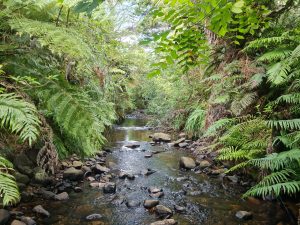
Our nature-based solutions services can be applied to all sectors, and include approaches such as blue-green infrastructure, stream daylighting and naturalisation, wetland creation, restoration and more. We apply nature-based solutions to integrated catchment management, climate adaptation, land use management, and slope protection.

We aim to take an integrated environmental management approach to our projects, which responds to the ways nature is complex, multifaceted, and interconnected.

Sustainability by Design

Our Sustainability by Design process, an ongoing programme that launched in 2024, is integrating sustainability thinking throughout the project lifecycle. As ‘taking care of nature in the built environment’ is a key impact, we are providing our project teams with tools and resources that support protecting and enhancing our natural environment while also supporting consideration of wider sustainability impacts.

A Steering Committee representing our different technical areas oversees the process and a Working Group made up of sustainability champions is responsible for collating, developing, and testing resources.

Our Sustainability by Design process includes:

  • Informed and effective discussions with clients and partners to shape the scope of their work
  • Identifying likely sustainability impacts and working with clients and partners to plan project steps to address impacts, as appropriate
  • Developing and refining solutions to address sustainability impacts together with clients and partners
  • Communicating potential impacts of options and designs to support informed decision making
  • Capturing and sharing learnings and innovations arising from the process.

Each area is supported by a set of specific prompts, tools, and guidance to support the process throughout the project lifecycle. Tools include an initial key impact assessment to guide targeting the most important sustainability impacts in a project, third-party embodied and lifecycle carbon calculation, and quick reference fact sheets for different sustainability impacts.

Lifecycle carbon measurement

Tonkin + Taylor has built a dedicated embodied carbon service with the people, methodology, and tools to deliver credible Life Cycle Assessments (LCAs) across infrastructure, geotechnical, civil, water, and environmental disciplines.

Our services cover whole-of-life carbon and greenhouse gas quantification from early concept through to detailed design. This includes early design option comparison, integration of Environmental Product Declarations (EPDs), and design optimisation to reduce both carbon and cost.

Learning from indigenous worldviews

Indigenous perspectives offer profound insights into environmental stewardship. Their holistic, cyclical understanding of natural systems complements contemporary sustainability approaches while adding cultural depth and place-specific knowledge.

Through our work in Aotearoa New Zealand, Australia, and the Pacific, we have been privileged to work with indigenous knowledge holders, and their passion for protecting land, water, and air. We have also seen this approach lead to risk reduction, innovation, and ultimately, improved outcomes for the natural environment, communities, and our clients. We believe that learning from and integrating indigenous worldviews into the way we approach our work will allow us to better enable the guardianship of our natural environment, and provide better, more resilient solutions for our clients.

We respect that indigenous knowledge is held locally. We are committed to growing our understanding and cultural competency, and supporting indigenous peoples when they lead and participate.

Through initiatives like our Te Kāhui Ngao Matariki (our Māori Leadership Team) in Aotearoa New Zealand, Pacific Business Leads group, and our Reconciliation Action Plan Working Group in Australia, we’re able to better advise and partner to capture and integrate these cultural values and environmental insights into our projects.

We’re working to embed our support of indigenous knowledge and outcomes for indigenous people, including by developing statements of our commitment and our building our peoples’ cultural understanding to support this work. See more here.

Building sustainability capability

We have invested in a significant programme of sustainability capability building to help our people have the confidence and tools to integrate sustainability thinking into their work. In 2024 and 2025, we ran an intensive sustainability capability programme, to focus on equipping staff with the tools and confidence to integrate sustainability into their work. The programme included sessions with our Group Leadership Team and Project Directors, delivering deep dive training on carbon measurement and reduction strategies, circular economy, nature based solutions, indigenous partnerships and knowledge, and systems thinking, twice monthly 30-minute presentations open to all staff as part of our Sustainability Seeds series, Sustainability at T+T Group and Natural Environment on-demand e-modules, and sessions on Te Tiriti o Waitangi and Tikanga. Our refreshed intranet and learning platforms now hosts over 130 on-demand resources, ranging from short videos and fact sheets through to comprehensive guides, as well as links to useful external resources.

The materials are now part of our overall learning suite for our people.

Project processes

Taking care of nature in starts with our Sustainability Policy and purposeful decisions – informing the projects we target and how we shape our work.

Our project processes include considering project risks (threats and opportunities), technical oversight, and independent reviews. To best meet the specific environmental needs of projects and clients, our project teams can draw on the deep expertise we have in different areas of the natural environment.

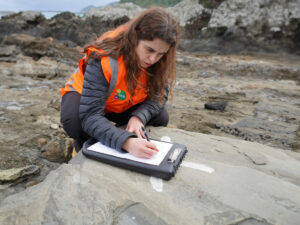
Before site visits and physical works, teams undertake an environmental risk assessment. Risks could include impacts of ground testing activities, such as sediment discharge into watercourses, or noise and dust disruption to local fauna and communities. Our staff receive role-appropriate environmental training to support identifying risks. The training includes:

  • Protecting the environment (all staff)
  • Environmental awareness in the field (New Zealand field staff and all of Geotechnics)
  • Environmental compliance (project managers)

A random sample of risk assessments are reviewed each quarter as part of our internal review process to ensure the environmental risks associated with our jobs and tasks have been identified correctly and the identified mitigations are appropriate.

Environmental performance is also a key consideration in the suppliers and third parties we choose to work with on our projects.

Looking for innovative and sustainable solutions for your next project?

Get in touch – together we create and sustain a better world.

Contact Us
Close Menu